Staten Island, NY
Drywall Repair in Staten Island With One Person to Call
We fix holes, cracks, water stains and sagging ceilings, hang and finish new drywall, and do the sanding and paint touch-ups that make a repair disappear. You deal with one person from the first call to the final walk-through, in Staten Island and nearby towns like Bayonne and Perth Amboy.
- One contact, start to finish
- Written line-item estimates
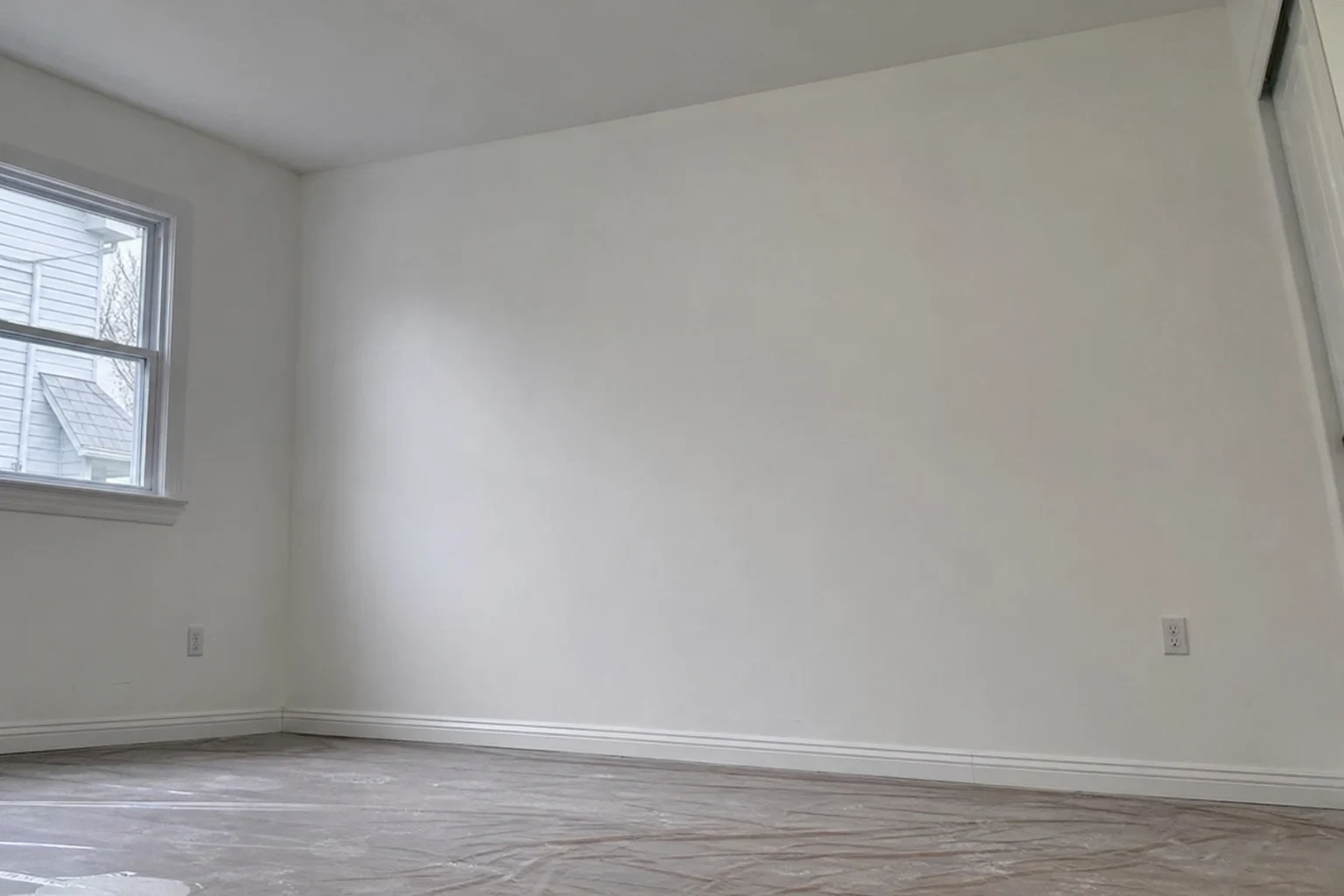
- Floors and furniture covered
- Texture matched to your walls
Drywall and Ceiling Work We Handle
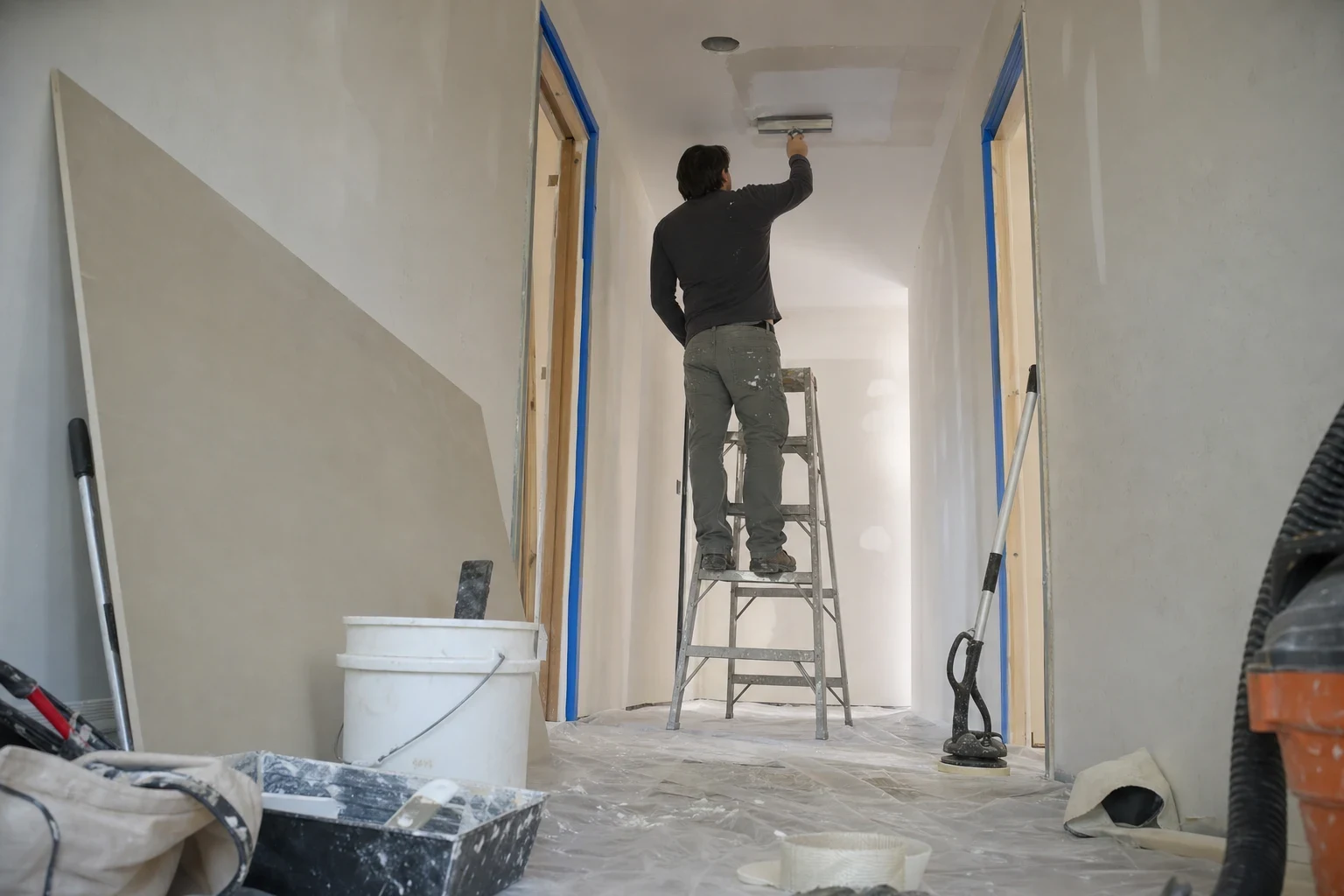
Most of our calls are for drywall repair and drywall patching: a doorknob hole, a cracked seam, a section cut out after a leak. We also do drywall hanging and drywall finishing for basements, additions and rooms that need new board. Wall repair and ceiling repair cover the bigger problems, like water damage or a ceiling that has started to sag. Surface preparation and sanding and paint touch-ups finish the job so the patch blends in with the rest of the wall.
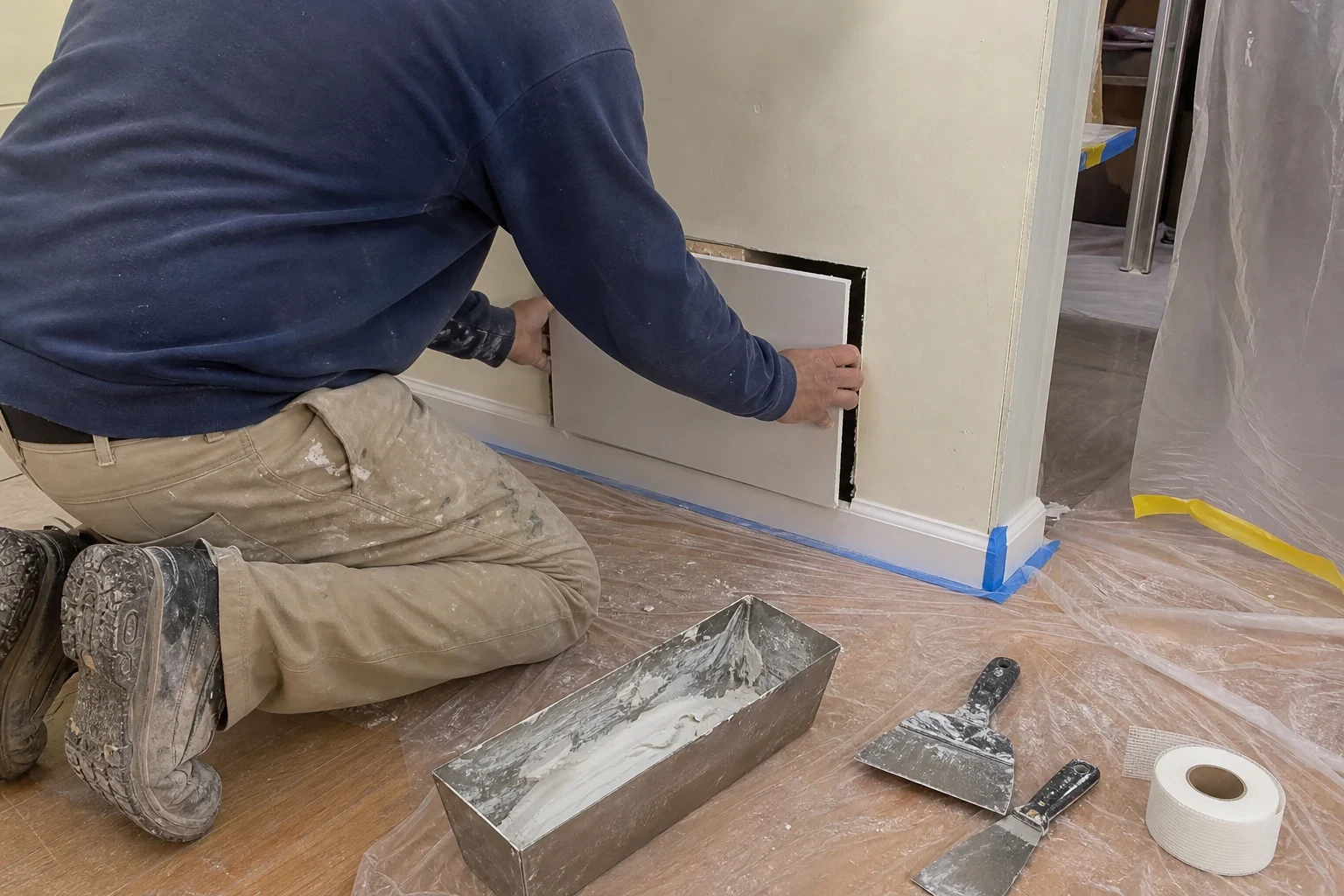
Drywall Repair
We fix holes, cracks, popped nails and water-stained drywall, then sand and blend the repair so it disappears into the wall around it.
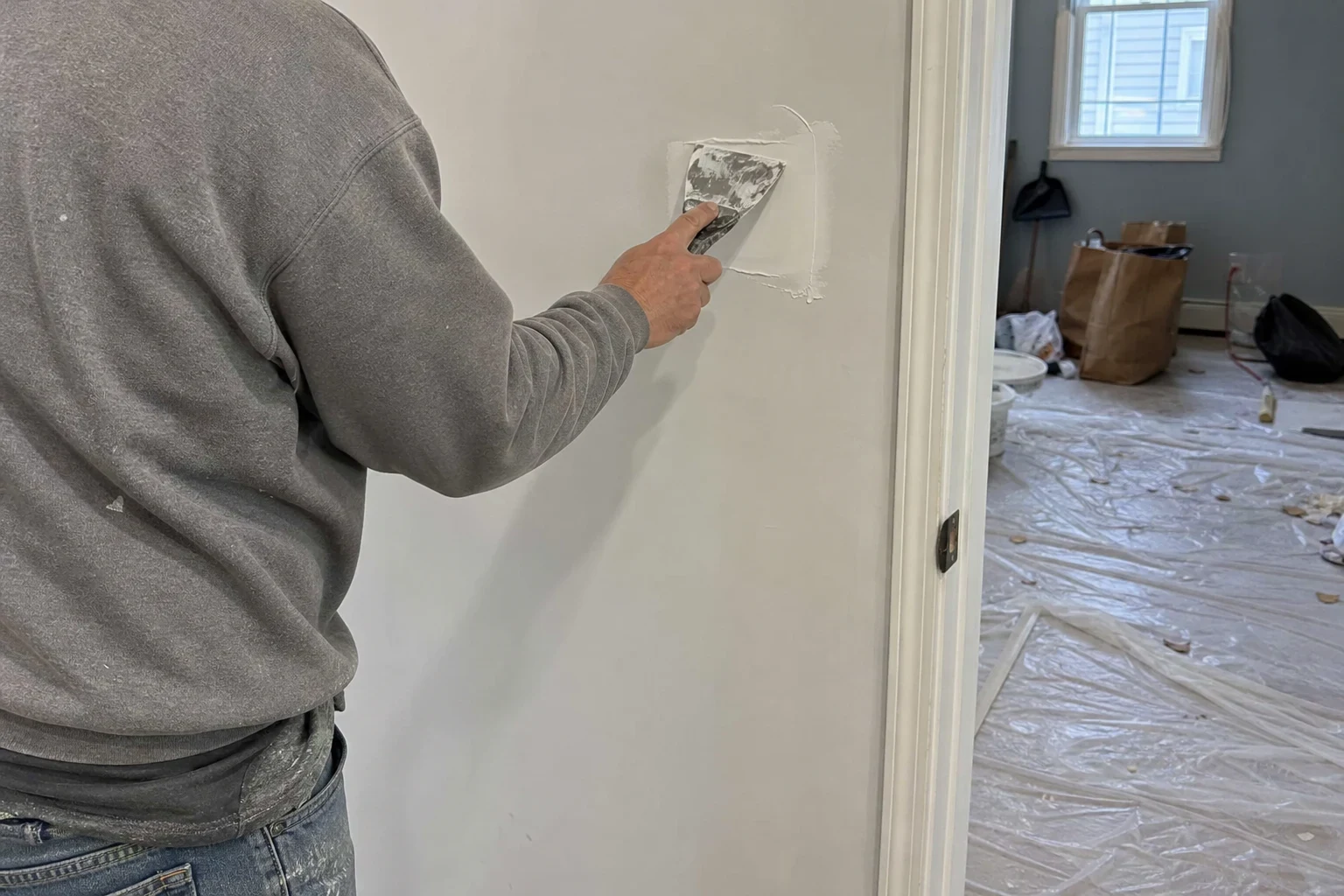
Drywall Patching
Doorknob holes, anchor holes, old cut-outs and dents patched, sanded and texture matched so the spot stops catching your eye.
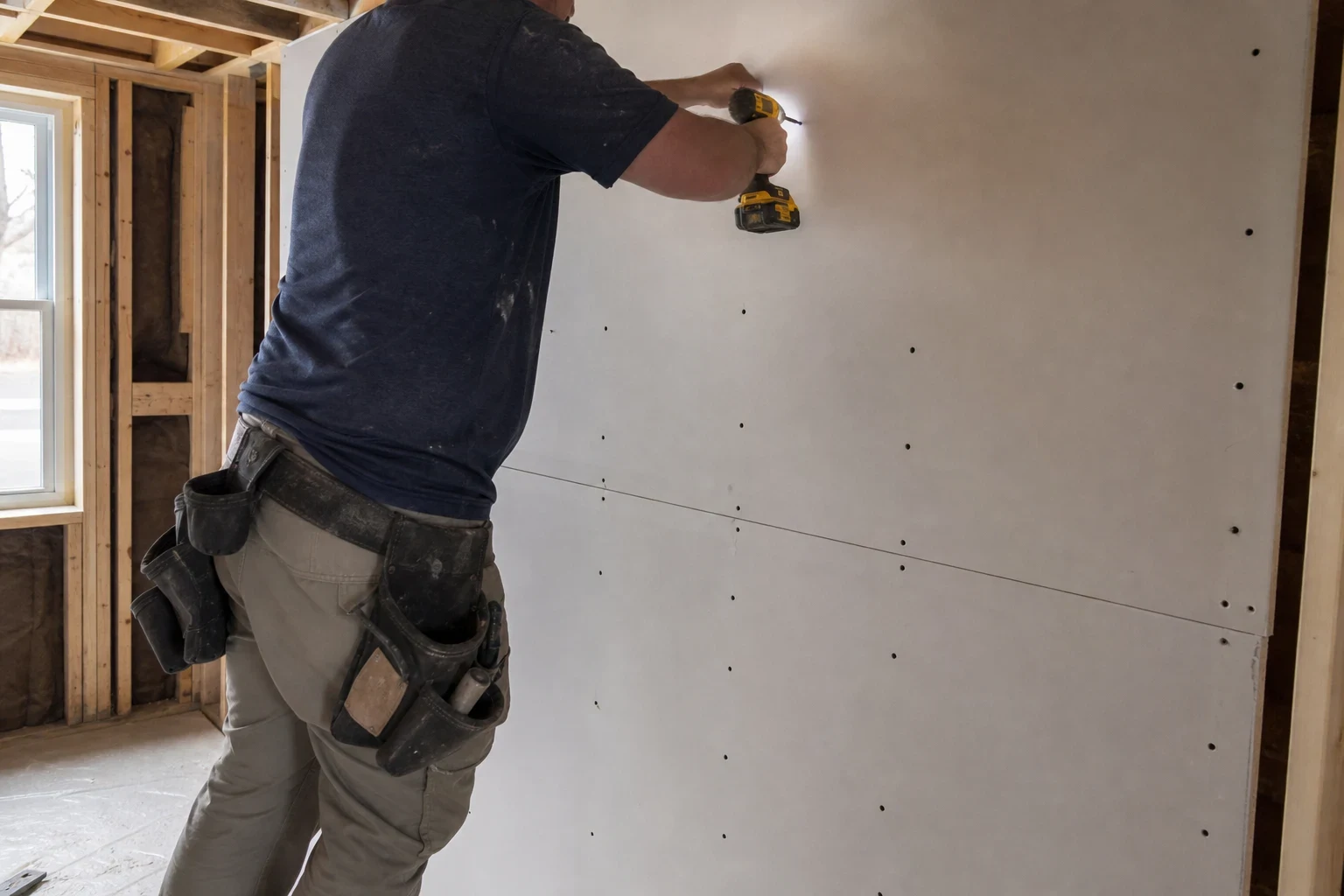
Drywall Hanging
New drywall hung on open studs, ceilings or over damaged plaster, with sheets laid out to cut down on seams and screwed to a proper pattern.
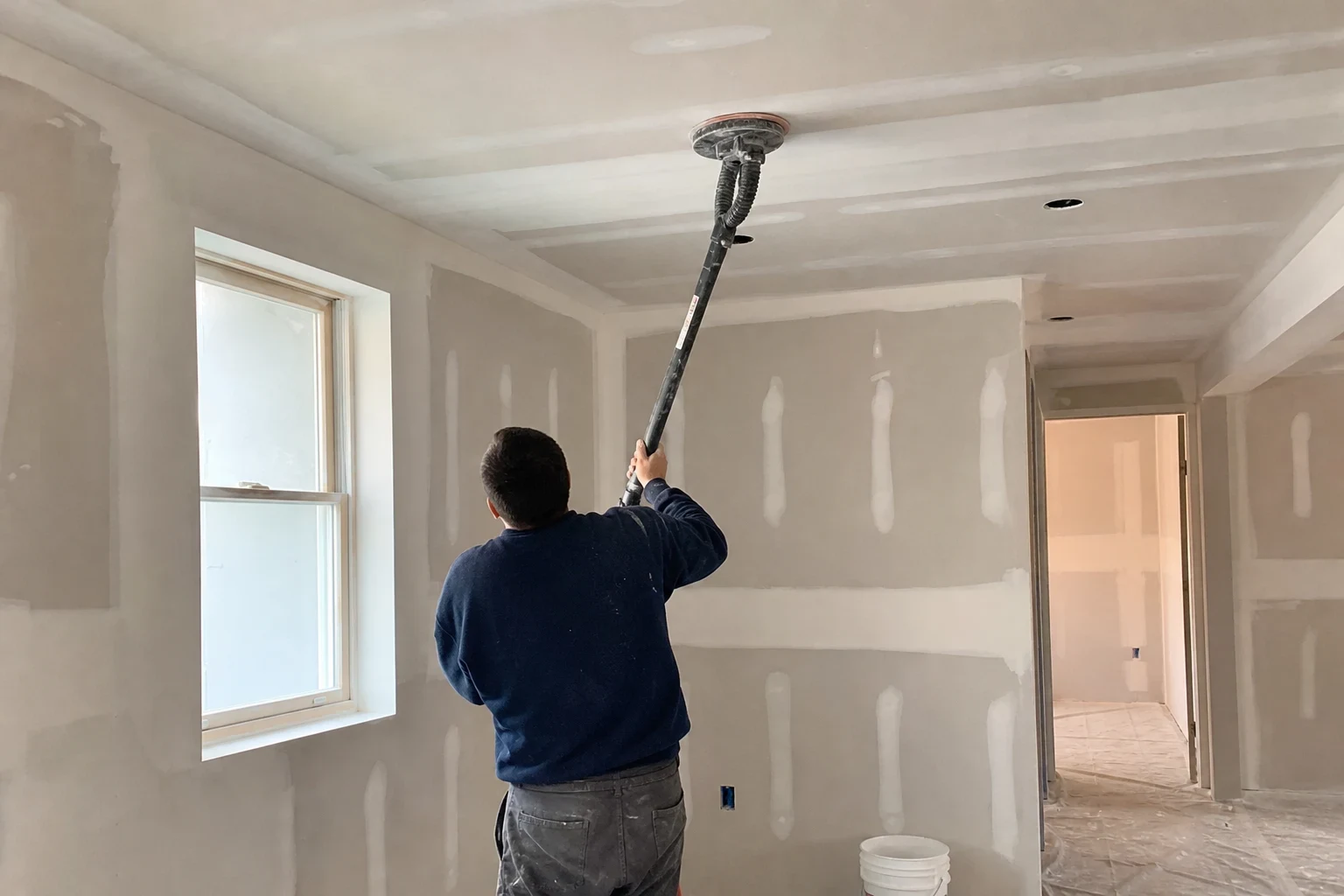
Drywall Finishing
Tape, mud, corner bead and sanding done coat by coat, so new or repaired drywall dries flat and takes paint without seams showing.
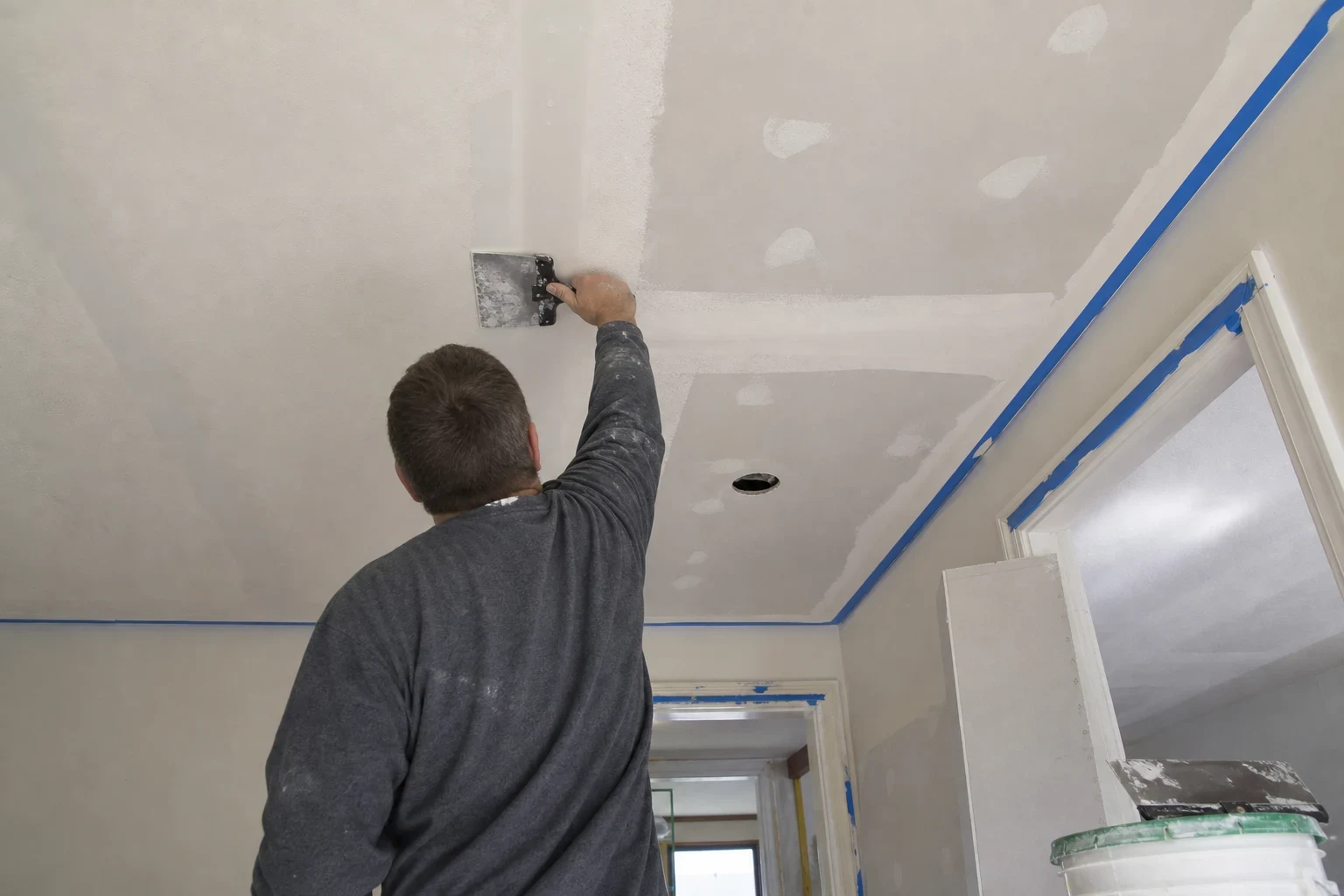
Wall Repair
Cracks, holes, dents and water-stained spots in drywall or plaster walls, repaired and blended so the damage stops showing.
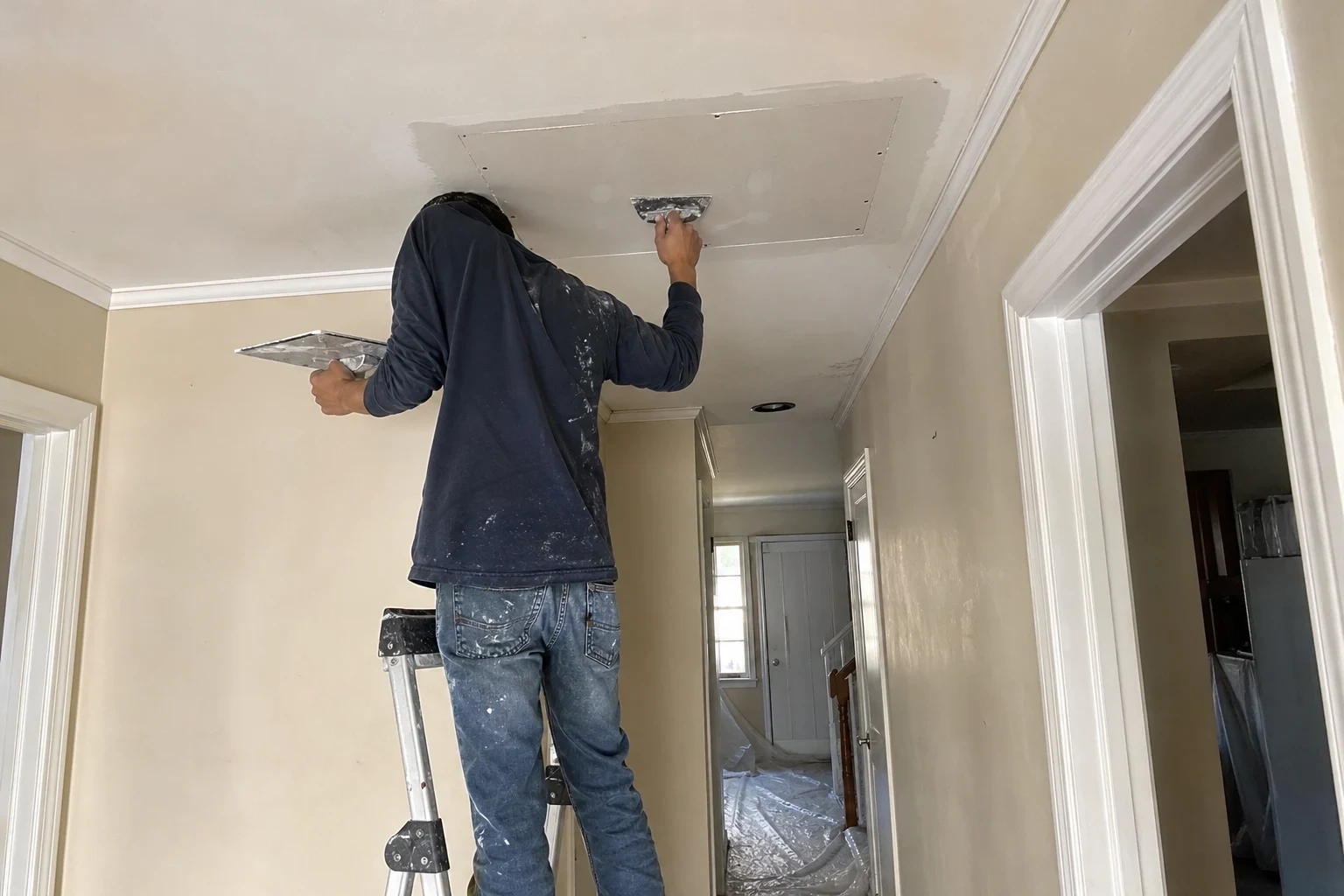
Ceiling Repair
We cut out water-damaged or sagging ceiling drywall, patch it, match the texture and leave the spot ready to blend with the rest of the room.
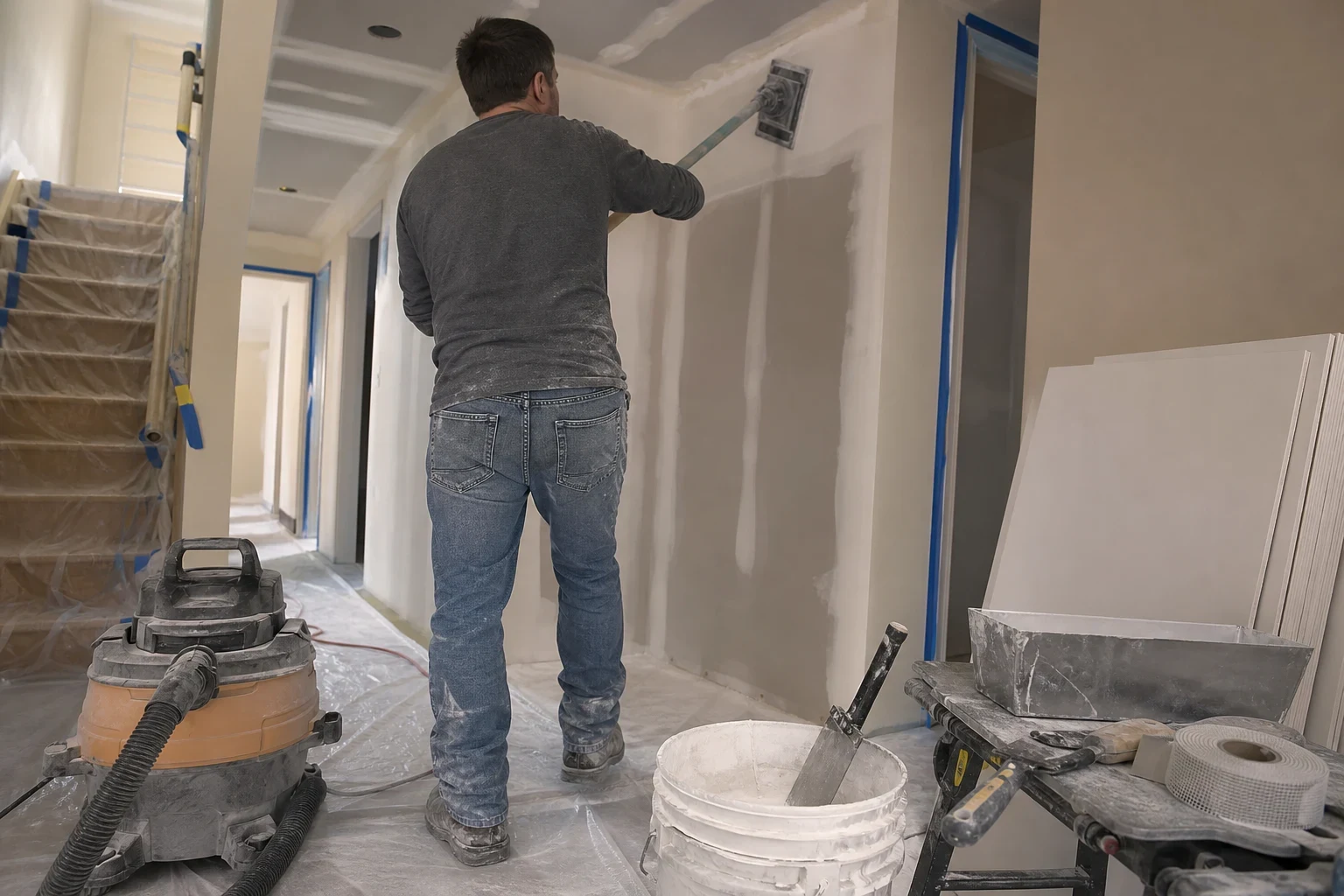
Surface Prep and Sanding
We fill, skim and sand damaged or rough walls and ceilings so old patches, dents and peeling spots stop showing through the finish coat.
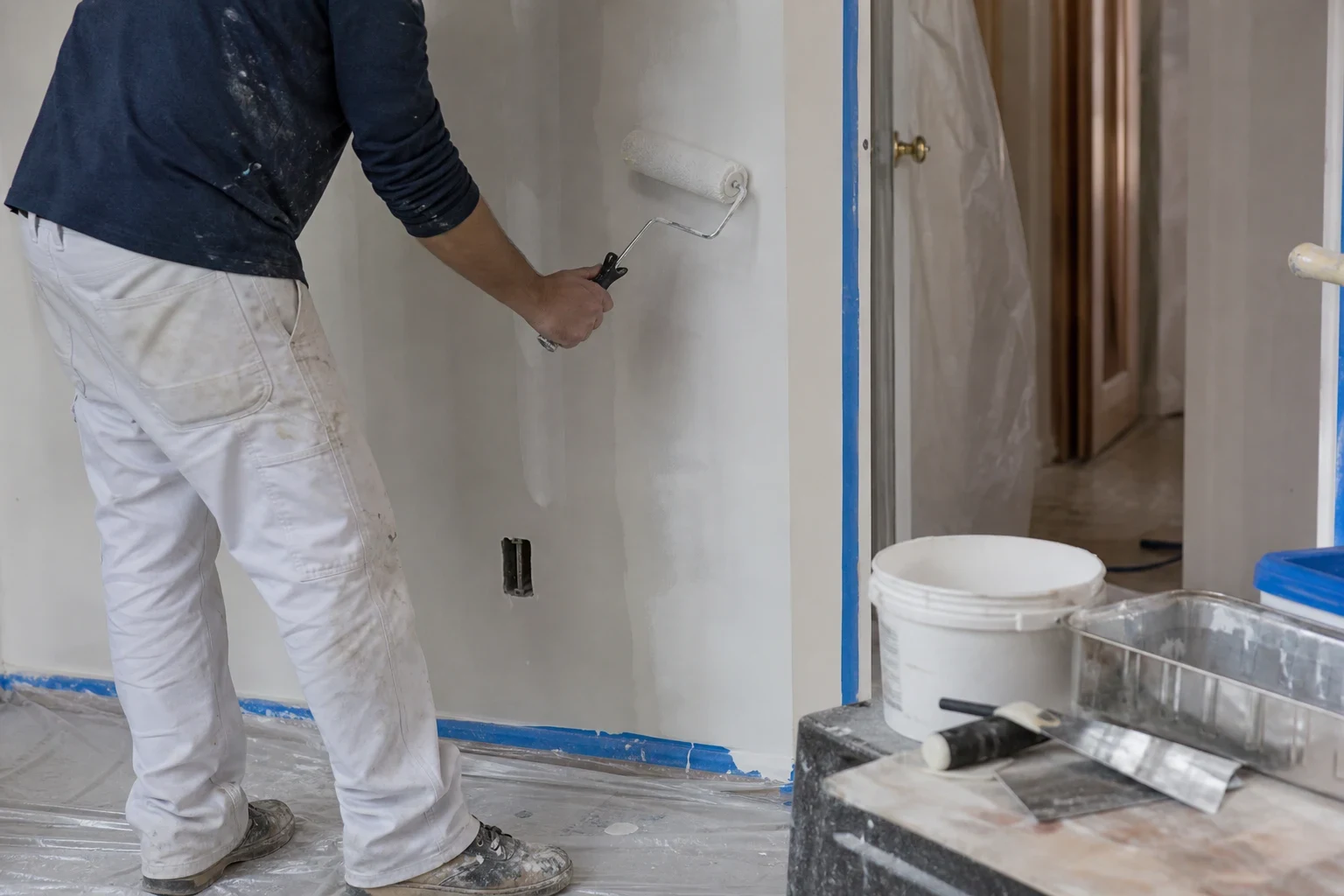
Paint Touch-Ups
Small paint fixes over patches, scuffs and stains, primed and matched for color and sheen so the spot stops catching your eye.
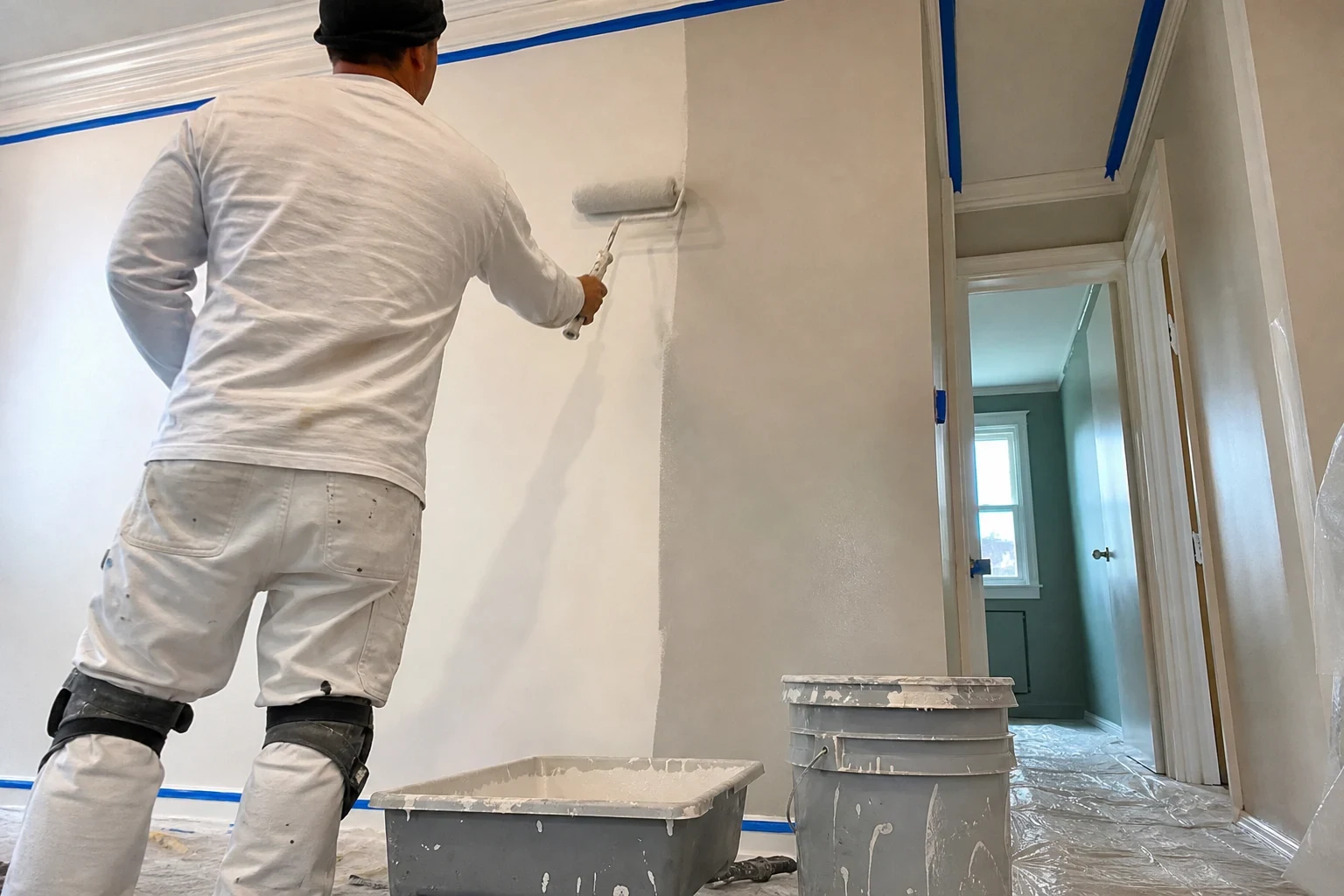
Paint-Ready Walls
Before a room gets painted, we repair the drywall, finish the seams, sand and prime so the new color goes on smooth with no old damage showing through.
What Moves the Price of a Drywall Job
No two walls fail the same way, so we price each job after we see it. These are the things that change the number. We go over each one with you on the estimate.
You get your quote by phone first, then a written line-item estimate after we see the wall. If we find something new once the wall is open, we stop and talk to you before any extra work.
- Size and number of repairs
- One fist-sized hole is a short visit. Ten patches across three rooms, or a full sheet of new board, takes more material and more trips for coats to dry.
- What is behind the damage
- A water stain can be a surface mark or a soaked panel with wet insulation behind it. We check with a moisture meter before we quote, because a wet wall has to dry before it can be closed up.
- Ceilings and high spots
- Ceiling repair takes more setup than wall work. Stairwells and tall ceilings need ladders or staging, and overhead sanding is slower.
- Texture matching
- A smooth wall is the simplest finish. Matching an existing knockdown or older hand-applied texture takes test spots and extra time.
- Finish level
- A garage or closet wall can stop at a basic finish. A living room wall under bright light needs more coats and careful sanding so seams do not show.
- Paint touch-up
- If you have leftover paint, we use it. If not, we match the color, and a large patch may need the whole wall touched up so the sheen blends.
Where We Work
We do drywall repair, ceiling repair and finishing work across Staten Island, NY. We also take jobs in nearby New Jersey towns, including Carteret, Port Reading, Woodbridge, Perth Amboy, Elizabeth, Bayonne, Linden, Rahway, Roselle and Hazlet. The same person coordinates your job no matter which town you are in.
- Staten Island
- Carteret
- Port Reading
- Elizabeth
- Woodbridge
- Bayonne
- Perth Amboy
- Linden
- Rahway
- Roselle
- Hazlet
If you are not sure whether we cover your street, ask when you call and we will tell you straight.
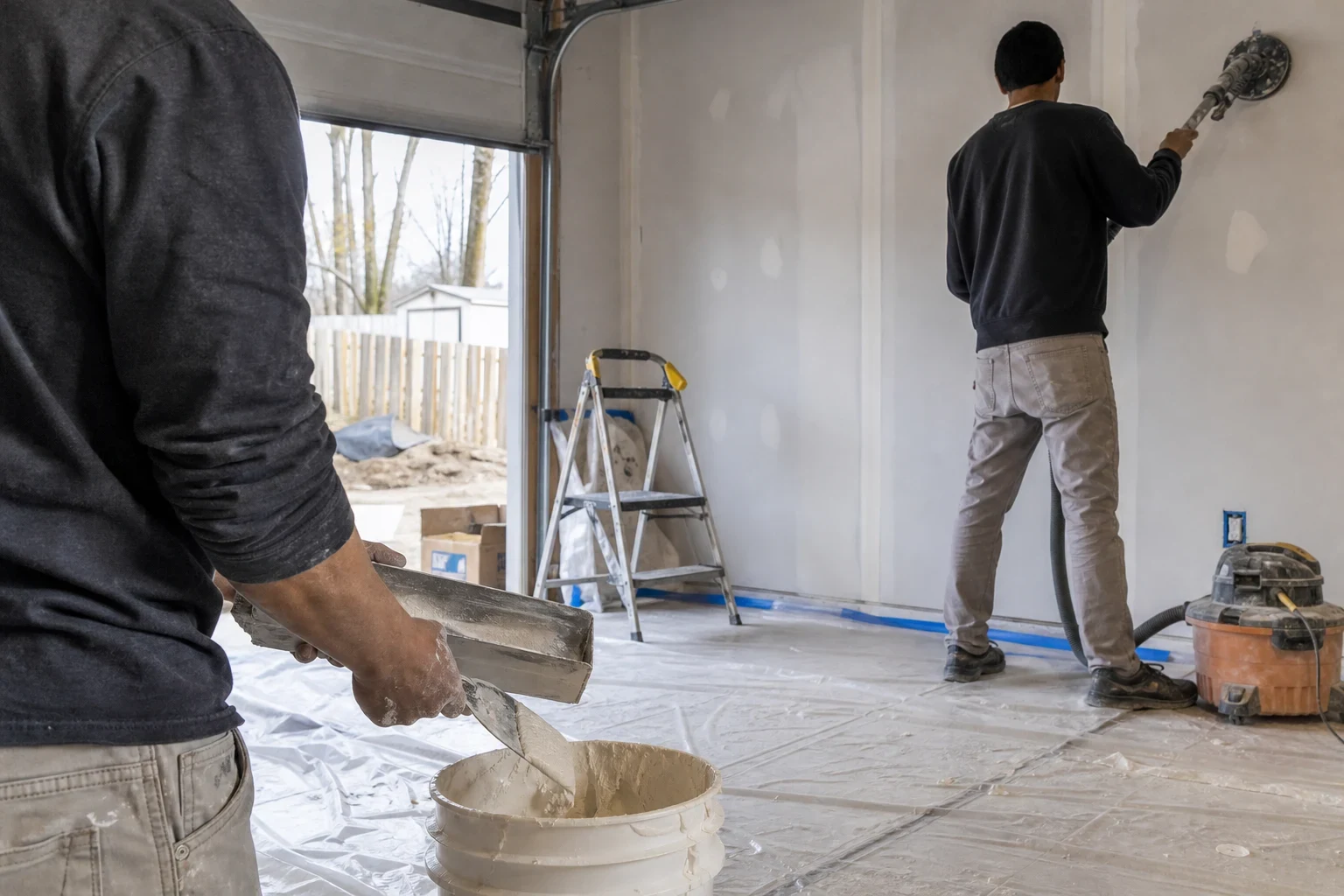
A Small Drywall Company With One Person in Charge
We are a drywall company that works inside people's homes in Staten Island. Our customers are homeowners, landlords and property managers who need a wall or ceiling fixed right and do not want to chase a crew to get it done.
The way we run jobs is simple. One person takes your call, sees the damage, writes the estimate and stays on the job until the last drop cloth is folded. A lot of the houses here have older plaster or early drywall that cracks at the seams as the heat goes on each winter, and knowing how that material behaves is part of getting a patch that lasts.
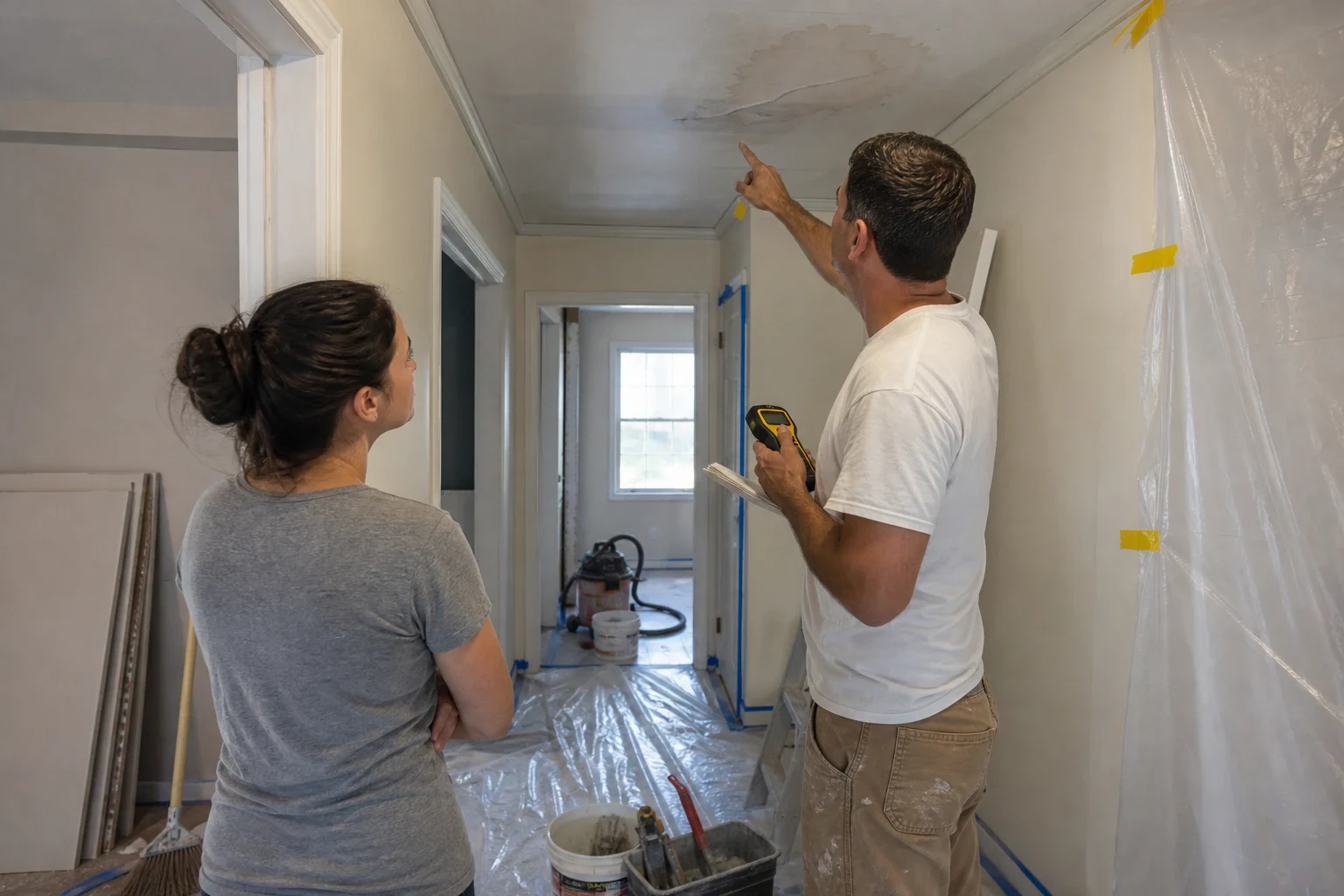
Why People Call Us Back
A small drywall job should not mean five phone calls and three different people. Here is how we work.
- The same person, every step
- The person who answers your call is the one who looks at the damage, writes the estimate and checks the finished wall with you. If you have a question on day two, you already know who to ask.
- Estimates you can read
- We write the estimate line by line: patch size, number of coats, sanding, texture, touch-up. You see what each part of the job is before you say yes.
- An honest answer on patch or replace
- A small hole gets a patch. A soft, stained section gets cut out and replaced. We tell you which one your wall needs and show you why, with photos if the damage is behind the surface.
- Texture and finish that match
- Smooth walls, orange peel, knockdown and old swirl ceilings all take a different hand. We test the texture on a small spot first so the repair does not show once it is painted.
- A clean work area
- Drywall dust gets everywhere if you let it. We lay drop cloths, tape off doorways when we sand, and vacuum and wipe down before we leave each day.
Common Questions
Can you make a patch that does not show?
In most cases, yes. The trick is feathering the compound wide, sanding it flat and matching the texture before paint goes on. On a smooth wall under strong window light we may recommend touching up the full wall so the sheen is even.
How long does a drywall repair take?
A small patch often takes two short visits, because each coat of compound has to dry before the next. Larger repairs or new drywall can take a few days. We give you the schedule on the estimate so you know which days we will be in your home.
I had a leak. Can you fix the wall or ceiling now?
Only once the source is fixed and the area is dry. We check with a moisture meter, and if the board is soaked we cut it out rather than patch over it. Closing up a wet wall can lead to mold and a second repair later.
Will you deal with my insurance company?
We are not adjusters and we do not handle your claim. What we can do is give you a written, itemized estimate and photos of the damage, which is usually what an adjuster asks for. You and your insurer decide on the claim.
How messy is drywall work?
Sanding makes fine dust, so we plan for it. We cover floors and furniture, seal off doorways with plastic when we sand, and vacuum before we leave. Most rooms are usable again the same evening.
Do you match ceiling texture?
Yes. Popcorn, knockdown, orange peel and older swirl patterns can all be matched. We test a small spot first and adjust until it blends with the ceiling around it.
Who do I talk to once the job starts?
The same person you spoke with on the first call. They schedule the visits, answer your questions during the work and do the final walk-through with you. You never have to explain your job twice.
How a Job Runs
Most patch work takes a couple of short visits because joint compound needs time to dry between coats. Here is what to expect.
- 1
You call and describe the damage
Tell us what happened, how big the area is and which room it is in. Photos help if you can show them when we visit. We give you a rough idea of the job on the phone and set a time to see it.
- 2
We look at it and write the estimate
We check the wall or ceiling, test for moisture if there was a leak, and note the texture. You get a written estimate with each step listed.
- 3
We protect the room and do the work
Floors and furniture get covered first. We cut out bad board, set new drywall, tape and apply coats of compound, letting each dry before the next.
- 4
Sanding, texture and touch-up
We sand with dust control, match the texture and touch up the paint so the repair blends with the rest of the wall.
- 5
Walk-through and cleanup
We look at the finished work together in good light. Then we clean up, take our debris with us and leave the room ready to use.
Have a Hole, Crack or Stain to Fix?
Call and tell us what you are looking at. You will talk to the person who will see the job through to cleanup.