ServicesPaint Touch-Ups
Paint Touch-Ups in Staten Island
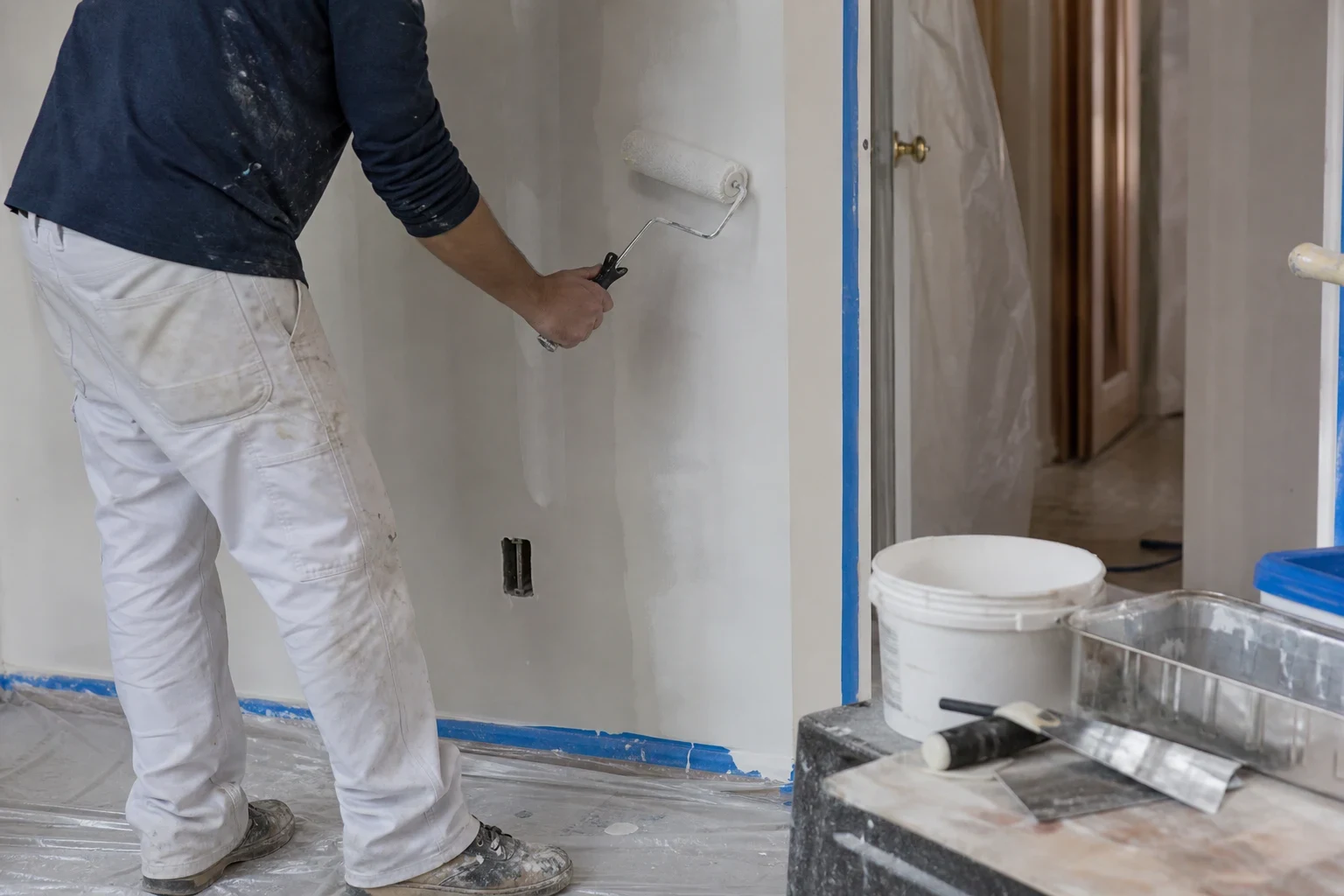
A good patch can still look wrong if the paint over it shows. We prime, match the color and sheen, and feather the edges so the repair fades into the wall. One person handles your job from the first call to the final wipe-down.
Small paint fixes that should not show
A paint touch-up covers a small area: a fresh drywall patch, a scuffed hallway, a nail pop we just reset, a faint stain on the ceiling. The goal is simple. When you walk into the room, you should not be able to find the spot.
That is harder than it sounds. Fresh joint compound soaks up paint differently than the old wall, so an unprimed patch dries dull. Eggshell next to flat shows a shine line. Paint from a can that sat in the basement for years may have shifted color. Even a roller with a different nap leaves a texture you can see in low light.
In older Staten Island homes, walls often carry several coats from different owners and nobody knows the last color. We sort that out before any paint goes on, and you deal with the same person the whole way through, so you are never repeating your story.
What a touch-up job includes
Color and sheen check
We look for your leftover can and read the label for the brand, color code and finish. If there is no can, we match from the wall itself.
Priming bare compound
Every patch gets a coat of primer first. This stops the dull flat spot that shows up when paint goes straight onto joint compound.
Stain-blocking on ceilings
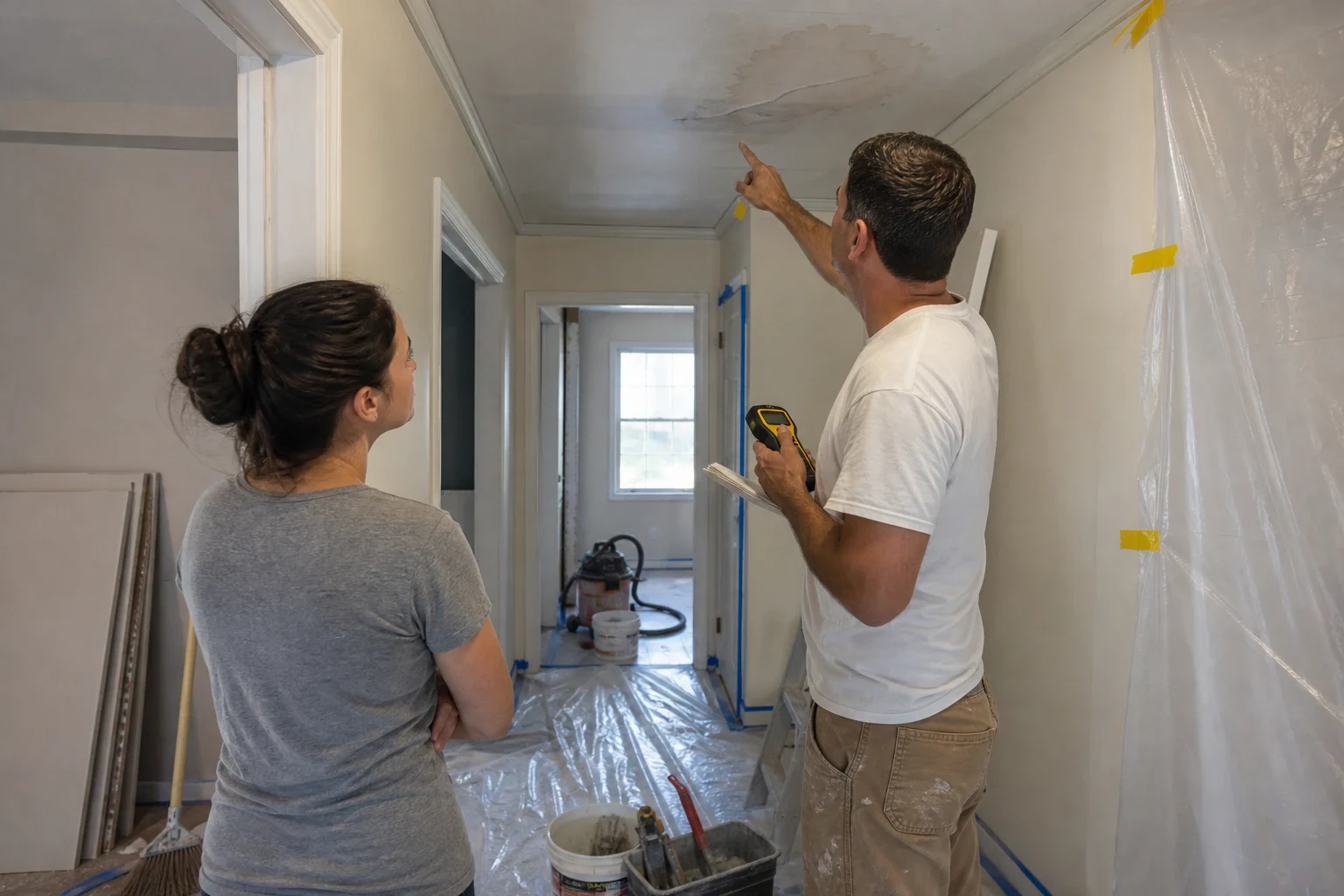
Old water marks bleed through regular paint. We seal them with a stain-blocking primer before the finish coat goes on.
Feathered edges
We roll out past the repair and thin the paint toward the edges, using a roller that matches the wall texture. That avoids a hard square outline.
Covering and cleanup
Drop cloths go down under every spot and furniture gets moved or covered. We leave a clean work area and take our trash with us.
Signs your walls need a touch-up
- Patches you can still see
- The wall is smooth, but the patch looks duller or shinier than the paint around it. That usually means it was never primed or the sheen is off.
- Scuffs and marks that won't wash off
- Hallways, stair walls and spots behind doors take a beating. When scrubbing just burns the paint shiny, it is time to recoat.
- A yellow ring on the ceiling
- The leak is fixed, but the stain is still there. Plain paint will not hold it back for long.
- Fresh drywall work
- After a drywall patching or ceiling repair job, the new surface needs paint to finish the look.
- Old touch-ups that flash
- Someone dabbed paint with a brush and now you see blotches when the light hits the wall from the side.
How the work goes
- 1
You call and describe the spots
Tell us how many areas, what rooms and whether you still have the paint. We ask a few questions and set a time to look.
- 2
We look at the wall and the paint
We check the color, the sheen and the texture in person. You get a clear quote and an honest answer if a spot needs drywall repair before paint.
- 3
Prep and prime
We cover the floor, light sanding where needed, wipe off the dust and prime any bare compound or stains.
- 4
Paint and blend
We apply the finish coat, feathering it out past the repair. Most spots take two thin coats with drying time between.
- 5
Check and clean up
We look at each spot from different angles and in daylight. Then we pull the drop cloths and leave the room the way we found it.
What moves the price
Touch-up work is priced by the job, not by the gallon. The biggest factors are how many spots there are and how much detective work the color takes. We go over each item with you before we start.
- Number and spread of spots
- Five spots in one hallway take less time than five spots spread across three floors.
- Whether you have the paint
- A labeled leftover can saves time. Matching an unknown color from the wall takes a sample and extra steps.
- Sheen and texture
- Flat paint hides edges well. Eggshell, satin and textured walls need more care to blend, and sometimes the spot has to run out to a corner.
- Ceilings and stains
- Ceiling work needs ladders and stain-blocking primer, which adds time compared to a wall at eye level.
Paint touch-up questions
- Can you match my paint if I don't have the can?
- Usually, yes. We take a small chip from a hidden spot and have it matched. Older paint may have faded a bit, so on some walls we blend out to a corner so there is no edge to see.
- Why did my last touch-up show?
- The common causes are skipping primer, using a different sheen or brushing on paint that was meant to be rolled. Paint that sat in a cold garage can also change. We check each of these before we start.
- Do I need to buy the paint?
- No. If you have a labeled can in good shape, we will use it. If not, we pick up the matched paint as part of the job.
- Will you fix the dent or crack first?
- Yes. Paint will not hide a crack or a nail pop for long. If a spot needs drywall patching or wall repair first, we tell you and handle it as part of the same visit plan.
- How soon can I hang pictures or push furniture back?
- Touch-up areas are dry to the touch within a few hours. We suggest waiting a day before hanging anything or leaning furniture against the wall so the paint can harden.
Let's make those spots disappear
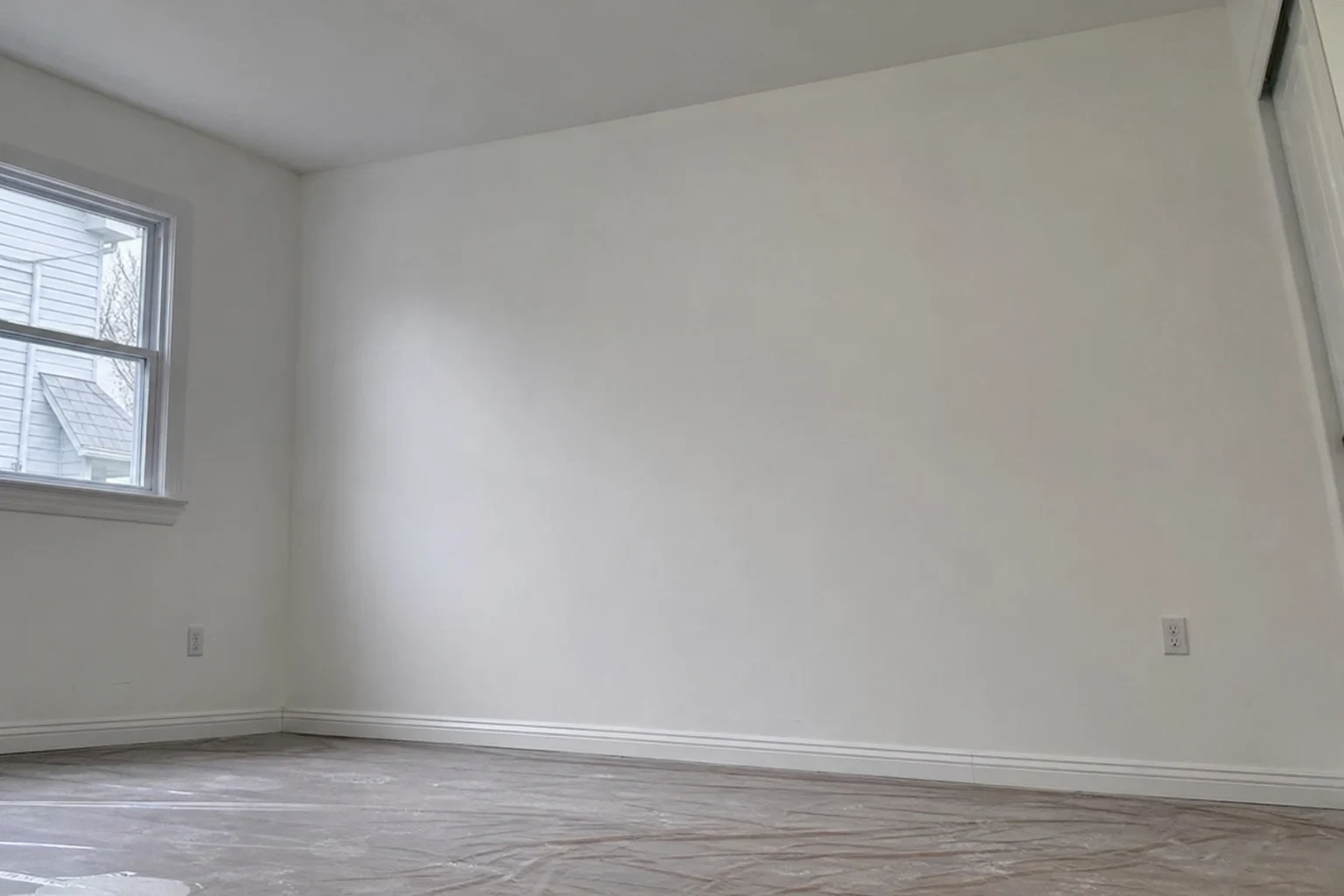
Tell us what you are seeing and where. The same person who takes your call will look at the wall, do the work and clean up after.