ServicesDrywall Hanging
Drywall Hanging in Staten Island
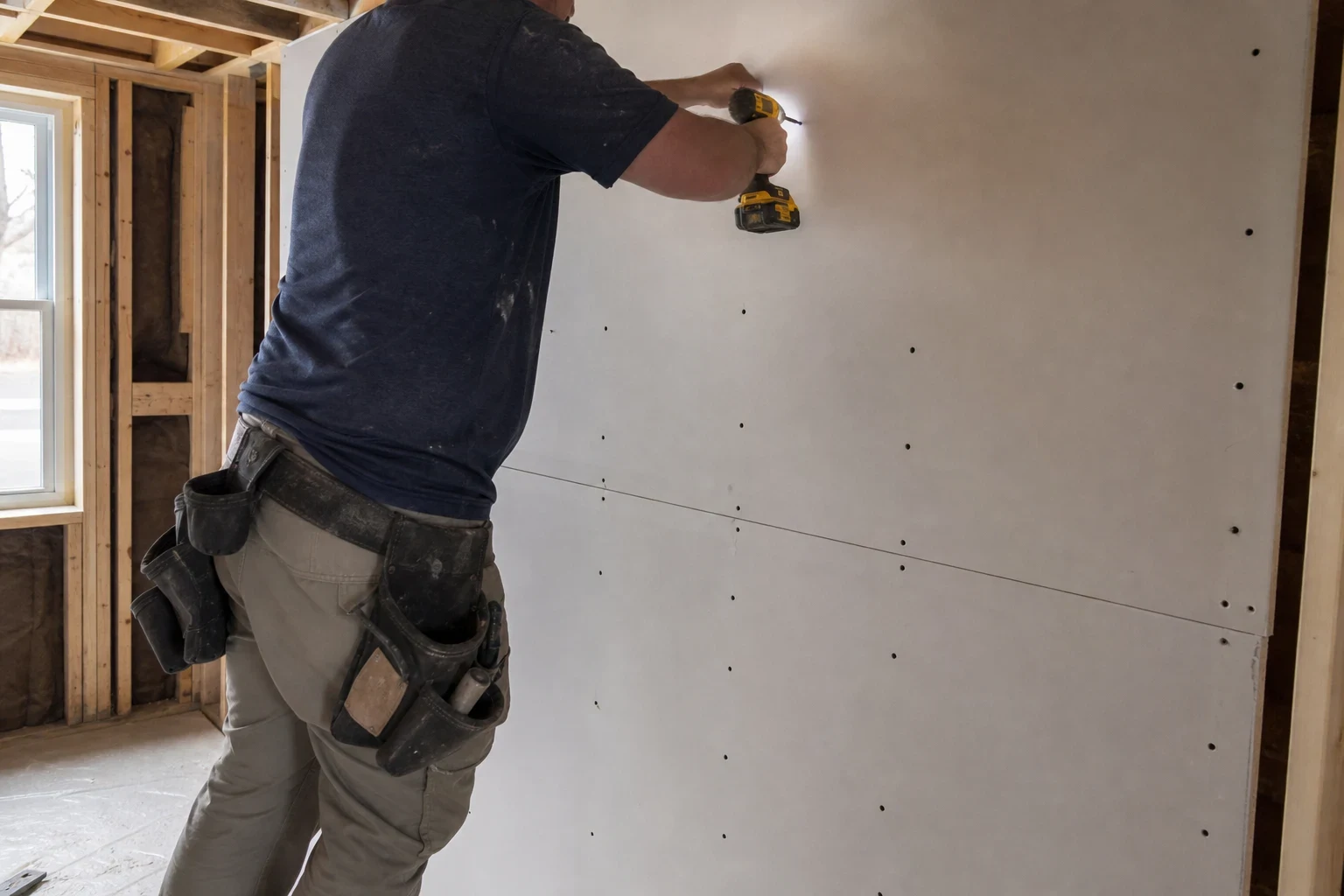
We hang new drywall on open studs, ceilings and old walls that are past patching. Sheets go up with fewer seams, the right board for each room and screws set where they hold. One person runs your job from the first look to the last sweep.
When New Drywall Is the Right Call
Hanging means putting up full sheets of drywall, not fixing a hole. It fits when the studs are open after a remodel, when a wall or ceiling took water and the board went soft, or when old plaster is cracked and loose across most of the room. If the damage is a few spots, a patch or a drywall repair usually costs less, and we will tell you that.
You deal with one person the whole way. The same person who looks at the room writes the estimate, answers your calls during the job and checks the work before we leave. You never have to repeat your plans to a new crew lead.
A lot of Staten Island houses mix newer drywall with original plaster. Hanging over or next to plaster takes some planning so the new wall lines up flush with the old one, and we sort that out before any board is cut.
What Our Drywall Hanging Covers
- 01
Sheet layout planned first
We map out the room before we cut. Longer sheets and smart placement mean fewer butt joints, and fewer joints mean less tape, less mud and a flatter wall.
- 02
The right board for each room
Standard board for bedrooms and living space. Moisture-resistant board near bathrooms and laundry areas. Fire-rated board where a wall or ceiling calls for it, like a wall shared with an attached garage.
- 03
Ceilings hung with a lift
Ceiling sheets are heavy and sag if they are not fastened right. We use a drywall lift and tighter screw spacing so the board stays flat for years.
- 04
Screws set to depth
Each screw sits just below the surface without tearing the paper. Torn paper and screws set too deep are what cause pops later.
- 05
Corners and openings
We cut clean around outlets, switches and windows, and put corner bead on outside corners so they stay straight and hold up to bumps.
- 06
Ready for finishing
Once the board is up, we can tape and finish it ourselves. See our drywall finishing page for how we take the wall from bare board to smooth.
Questions about Drywall Hanging?
Call(718) 841-0874Signs Your Walls Need New Drywall
Board that feels soft or crumbly
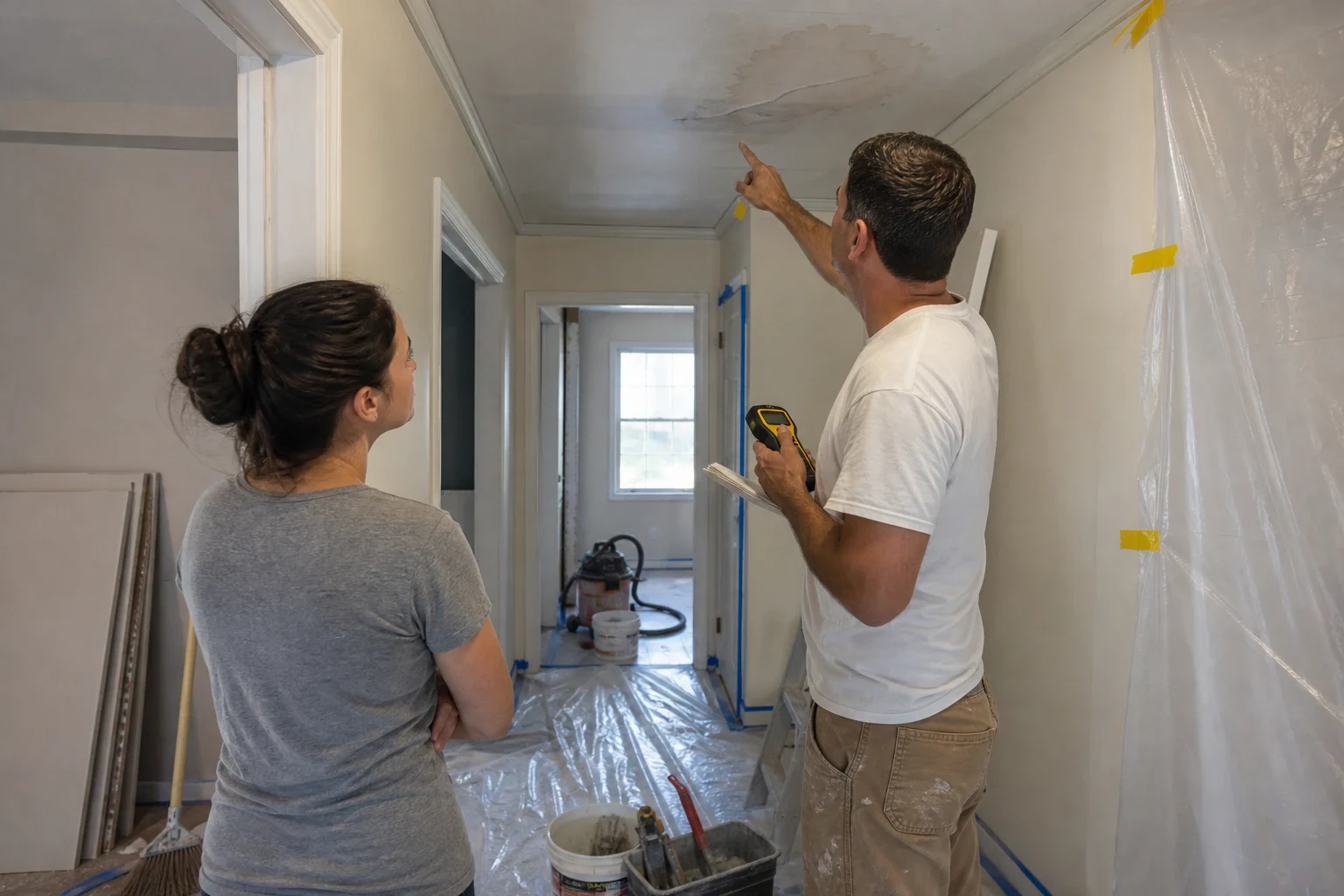
Drywall that took water loses its strength. If you can push a thumb into it or the paper peels away, it needs to come out and new board needs to go up.
Plaster pulling away from the lath
Old plaster that bulges or sounds hollow when you tap it is coming loose. Patching it rarely lasts.
Open studs after a remodel
You moved a wall, added a closet or ran new wiring. The framing is ready and the room needs to be closed up.
Sagging ceiling sections
A ceiling that dips between joists often means the board is too thin, got wet or was fastened poorly. New ceiling drywall fixes the cause, not just the look.
An unfinished basement or attic
Bare framing in a basement or attic room you want to use. Hanging drywall turns it into real living space.
How a Hanging Job Runs
- 1
Look at the room
We come out, measure and check the framing for straightness. You get a written estimate that lists the board, the square footage and what is included.
- 2
Protect your home
Before work starts, we cover floors along the path, seal off doorways with plastic and keep a clean work area. Furniture gets moved or covered.
- 3
Hang the board
Ceilings go up first, then walls, so the wall sheets help hold the ceiling edges. We fasten, cut openings and set corner bead.
- 4
Walk through with you
Your contact checks the job with you before the crew moves on to taping. If something needs adjusting, it gets done then.
- 5
Clean up
Scraps, dust and offcuts leave with us. The room is swept and the plastic comes down when the work is done.
What Moves the Price of Drywall Hanging
Most of the cost comes down to how much board goes up and how hard the room is to work in. We price the job after we see it, and the estimate shows each part on its own line. If something changes once the old wall is open, we talk with you before doing extra work.
- Square footage and ceiling height
- More sheets mean more material and labor. Rooms with tall or sloped ceilings take scaffolding or extra setup time.
- Type of board
- Moisture-resistant and fire-rated board cost more than standard sheets. Thicker ceiling board adds a little as well.
- Tear-out and the framing underneath
- Removing old drywall or plaster adds time and disposal. Crooked or damaged studs may need shimming or sistering before board goes on.
- Access and layout
- Stairs, tight hallways and rooms full of corners and openings slow the work. A plain rectangular room goes up faster than one with soffits and angles.
Drywall Hanging Questions
Do you tape and finish after hanging, or just hang?
We can do both. Hanging and finishing are separate steps, and many people hire us for the whole thing so one person handles it start to finish. If you have your own finisher, we can hang only.
Can you hang new drywall over old plaster?
Sometimes. If the plaster is solid and flat, thin board can go right over it. If it is loose or bulging, it should come down first, and we will show you what we found before deciding.
How long does a hanging job take?
It depends on the size of the room and how much tear-out there is. A single room usually goes faster than people expect. We give you a realistic schedule with the estimate and keep you updated if anything shifts.
How much dust will there be?
Hanging makes less dust than sanding, but cutting board still makes some. We seal off the room with plastic, cover floors and clean up every day so dust does not spread through your home.
Who do I call if I have a question during the job?
The same person who gave you the estimate. That person knows your room and your plans, so you get a straight answer without being passed around.
Ready to Close Up Those Walls
Tell us about the room, what is there now and what you want it to become. We will set a time to come look and give you a written estimate.