ServicesCeiling Repair
Ceiling Repair in Staten Island
Water stains, cracks, sagging panels and holes left by an electrician. We fix the damaged section, match the texture and finish it so the patch disappears. One person handles your questions and the schedule, from the first look to the last sweep.
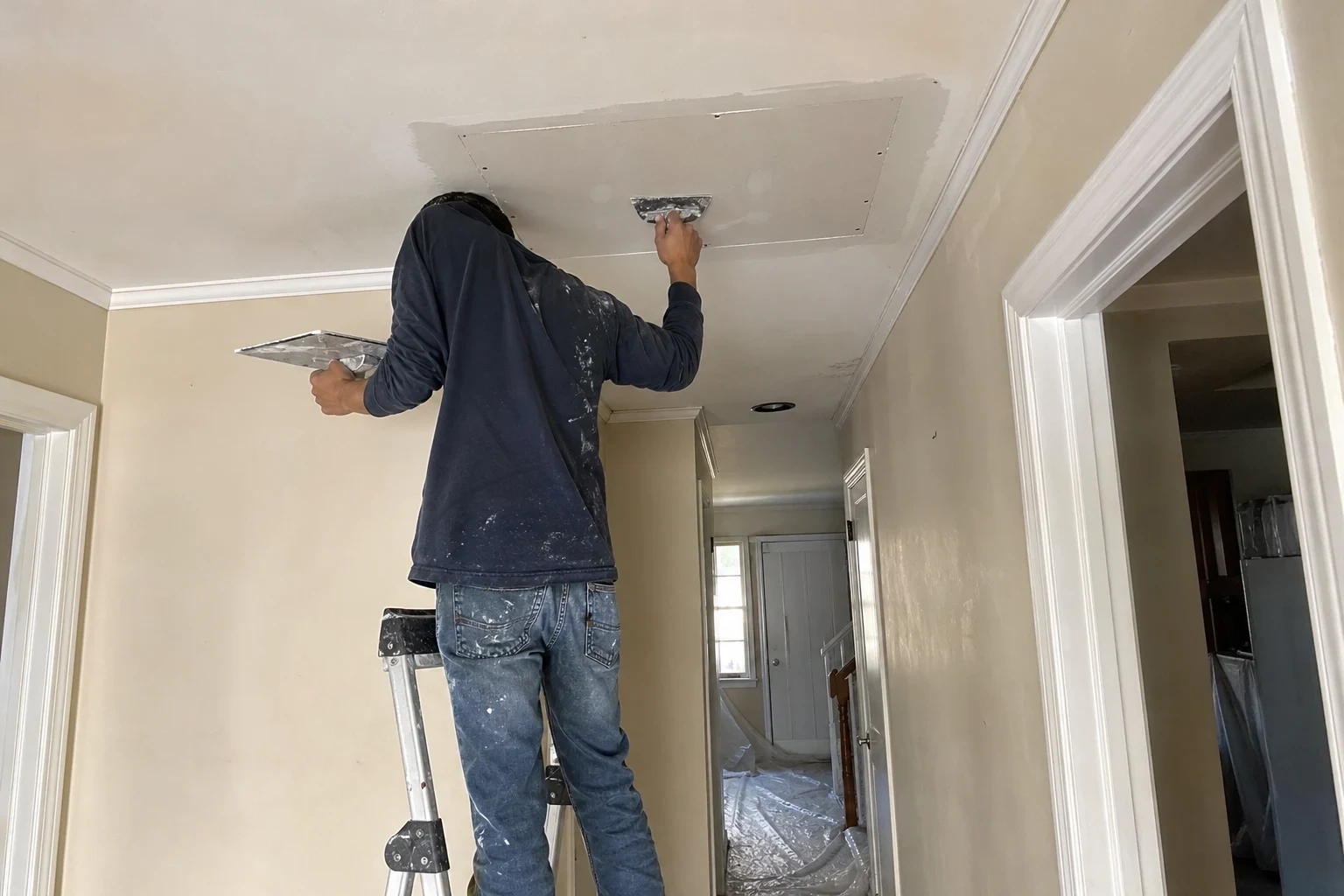
What ceiling repair covers
Ceilings fail differently than walls. Gravity works on them every day, so wet or loose drywall sags instead of just staining. Joints crack along the long seams, nail pops show up in rows, and a leak from the floor above can soften a whole panel without much warning.
We repair the damaged area, not the whole room, unless the ceiling truly needs it. That means cutting back to solid board, fastening into the joists, taping, and building up mud until the patch sits flat with the surface around it. Then we match the texture, whether that's smooth, light orange peel or popcorn.
You deal with one person the whole way. The same contact who looks at your ceiling writes the quote, sets the day and checks the work before we leave.
What's included in the job
Finding the edge of the damage
We press, probe and check with a moisture meter to see how far the soft drywall goes. Stains often spread wider than the wet area, and wet areas can be wider than the stain.
Cutting out and replacing board
Damaged drywall comes out back to the nearest joists. New board goes in with screws, and we add backing where the old edges have nothing to fasten to.
Taping and finishing
Seams get tape and several coats of joint compound, feathered out wide. Wide feathering is what keeps a ceiling patch from showing when light hits it from a window.
Texture matching
We match the existing finish so the repair blends in. Popcorn, knockdown and orange peel each take a different tool and a test spot first.
Primer and paint touch-up
New mud soaks up paint differently than old paint. We prime the patch, and if you have the ceiling paint on hand we do a paint touch-up over it.
A clean work area
Plastic goes down over floors and furniture, and dust is kept to the room we're in. We clean up before we go.
Signs your ceiling needs repair
A brown or yellow ring
That's water that came through and dried. Painting over it won't hold, and the board under it may already be soft.
Sagging or a soft bulge
Drywall that dips between joists has lost its hold or soaked up water. Keep people out from under it and get it looked at soon.
Cracks along a straight line
A long straight crack usually follows a taped seam that has let go. It tends to keep growing until it's re-taped.
Nail pops in a row
Small round bumps in a line mean fasteners are backing out of the joists. Common in older ceilings and after a dry winter with the heat running.
Holes from other work
Electricians, fan installs and leak access often leave square cutouts. We close them flat and texture them to match.
How the repair goes
- 1
Look and quote
We come out, check the damage and tell you plainly whether it's a patch or a bigger section. You get a written quote that lists what we'll do.
- 2
Fix the cause first
If water caused it, the leak has to be stopped and the area dry before we close anything up. We'll tell you if it's still wet and wait rather than trap moisture.
- 3
Prep and repair day
We cover the room, cut out the bad board, hang new drywall and apply the first coats. Small repairs often need a return visit so each coat can dry.
- 4
Finish and texture
After sanding we apply the matching texture, prime, and touch up paint if you have it. Your contact checks the spot in daylight before calling it done.
- 5
Cleanup
Plastic comes up, dust gets vacuumed, and scrap leaves with us.
What moves the price
Every ceiling is different, so we price after we see it. The quote spells out the work line by line, and if we find more damage once the board is open, we show you before doing anything extra.
- Size of the damaged area
- A fist-sized hole and a sagging section the length of a room are different jobs. Bigger areas mean more board, more mud and more time.
- Texture type
- Smooth ceilings need the most careful finishing. Popcorn and knockdown take extra steps to match.
- Height and access
- Stairwells and high ceilings need taller ladders or scaffolding. A full room of furniture also adds setup time.
- What's behind the board
- Water can damage insulation or leave mold on the back of the drywall. We point it out and price it separately so you can decide.
Ceiling repair questions
Something not covered here? (718) 841-0874
Can you just paint over a water stain?
Not if the board is still damp or soft. We check it first. If it's dry and solid, a stain-blocking primer and paint touch-up can be enough. If not, the section gets replaced.
Will I be able to see the patch?
The goal is that you can't. We feather the joint compound wide and match the texture. Paint is the usual giveaway, so having your original ceiling paint helps a lot.
Do you fix the leak that caused the damage?
No, we handle the drywall side. The leak needs to be fixed by the right trade before we close the ceiling, and we'll wait until the area is dry.
Can you match a popcorn ceiling?
Yes, in most cases. We test on a scrap or a small spot first. Very old popcorn can contain asbestos, so if your home is older we may ask that it be tested before we cut into it.
How long does a ceiling repair take?
A small patch can be done in a visit or two. Larger sections usually take two or three days because each coat of mud needs to dry before sanding.
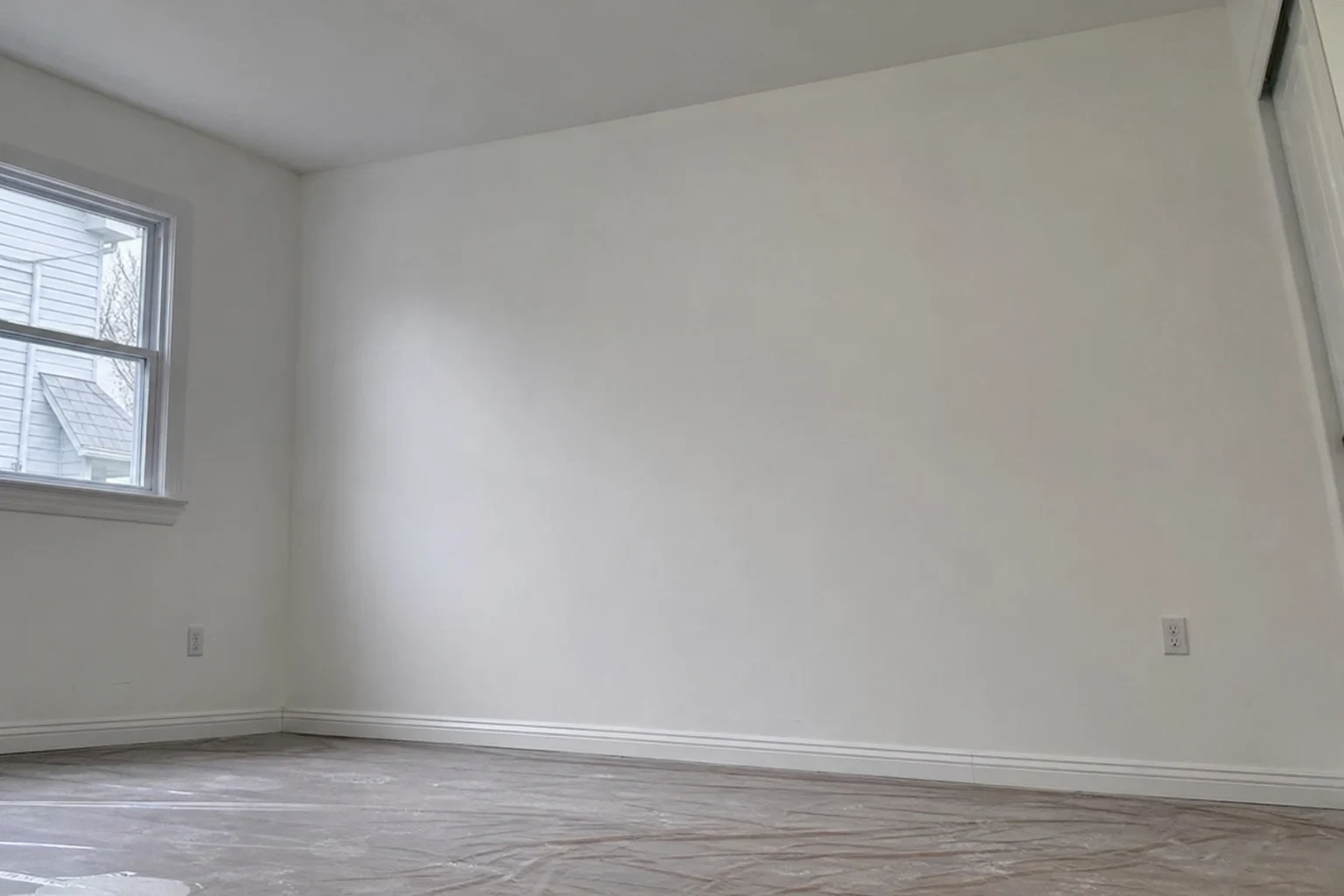
Get that ceiling fixed right
Tell us what you're seeing up there. The person you talk to is the one who'll quote the job and see it through to cleanup.