ServicesSurface Prep and Sanding
Surface Preparation and Sanding in Staten Island
Paint only looks as good as the wall under it. We scrape, fill, skim and sand your walls and ceilings until they are flat and smooth. One person handles your job from the first walkthrough to the last swept corner.
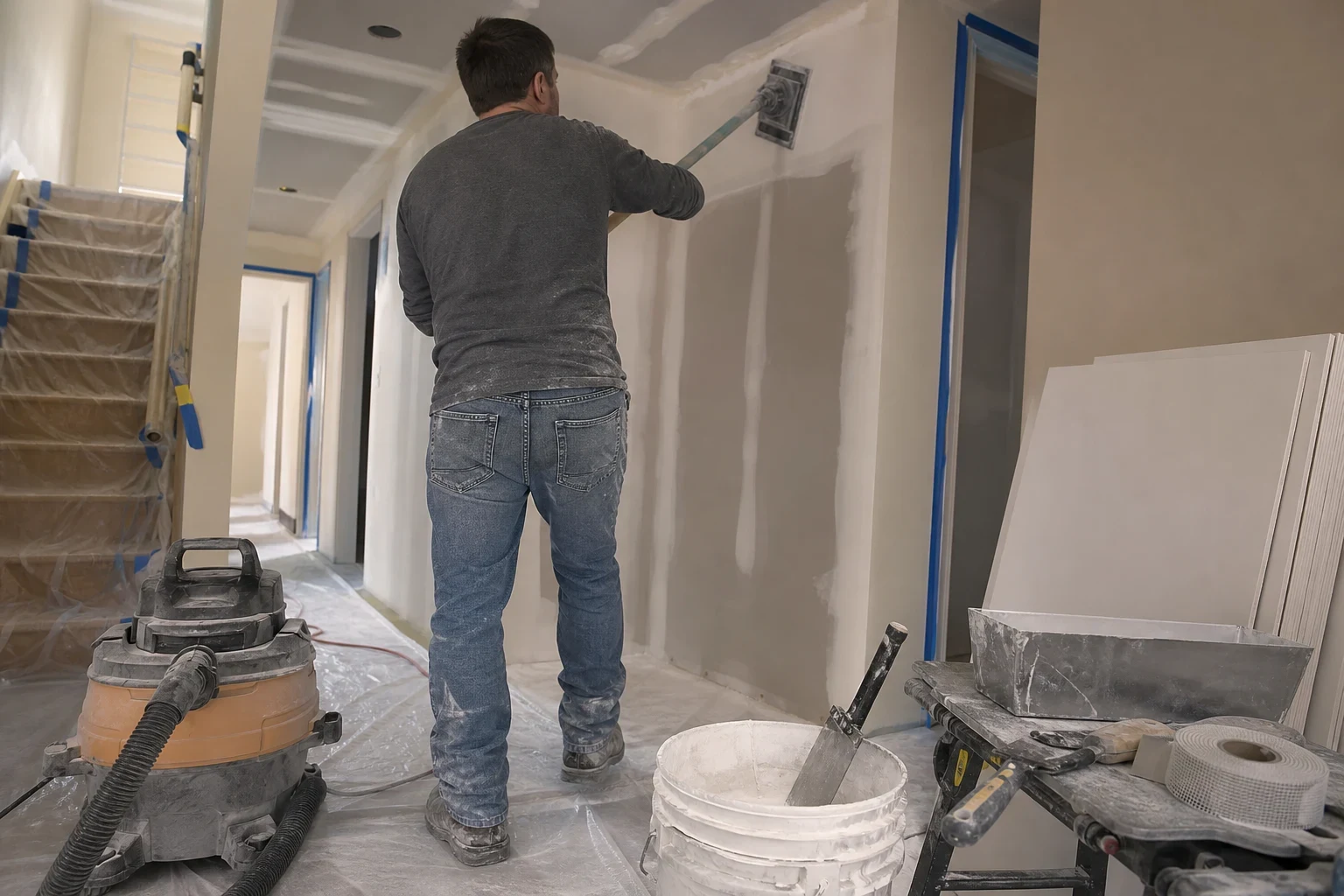
Smooth walls before the paint goes on
Surface preparation is the slow, careful part of wall work that most people skip. Nail holes, dents, old patches, peeling spots and torn paper all show through fresh paint, especially in a room with strong side light from a window.
We fix those flaws first. That means scraping loose paint, filling and skimming low spots, then sanding everything flat so the surface takes paint evenly. When we finish, the walls are ready for our paint touch-ups or for your painter.
You deal with one person the whole way. The same contact who looks at your walls answers your questions, sets the schedule and checks the work before we leave.
What the prep work covers
Scraping loose and peeling paint
We take off anything that is lifting or bubbling. Painting over it only traps the problem, and it peels again within a season or two.
Filling holes, dents and nail pops
Small holes get joint compound. Popped nails get reset with a screw first, then filled, so they do not push back out.
Skim coating rough areas
Walls with old texture, uneven patches or torn paper get a thin coat of compound over the whole area. This gives one flat surface instead of a dozen spots.
Sanding between coats
We sand each coat smooth and feather the edges out wide so patches blend into the wall around them. We check with a work light held flat to the wall to catch ridges you would see later.
Spot priming repairs
Bare compound soaks up paint differently than the rest of the wall. We seal repaired spots so they do not show as dull patches, a problem painters call flashing.
Dust control and cleanup
We cover floors, seal doorways with plastic and use sanders hooked to a vacuum. You get a clean work area back at the end of each day.
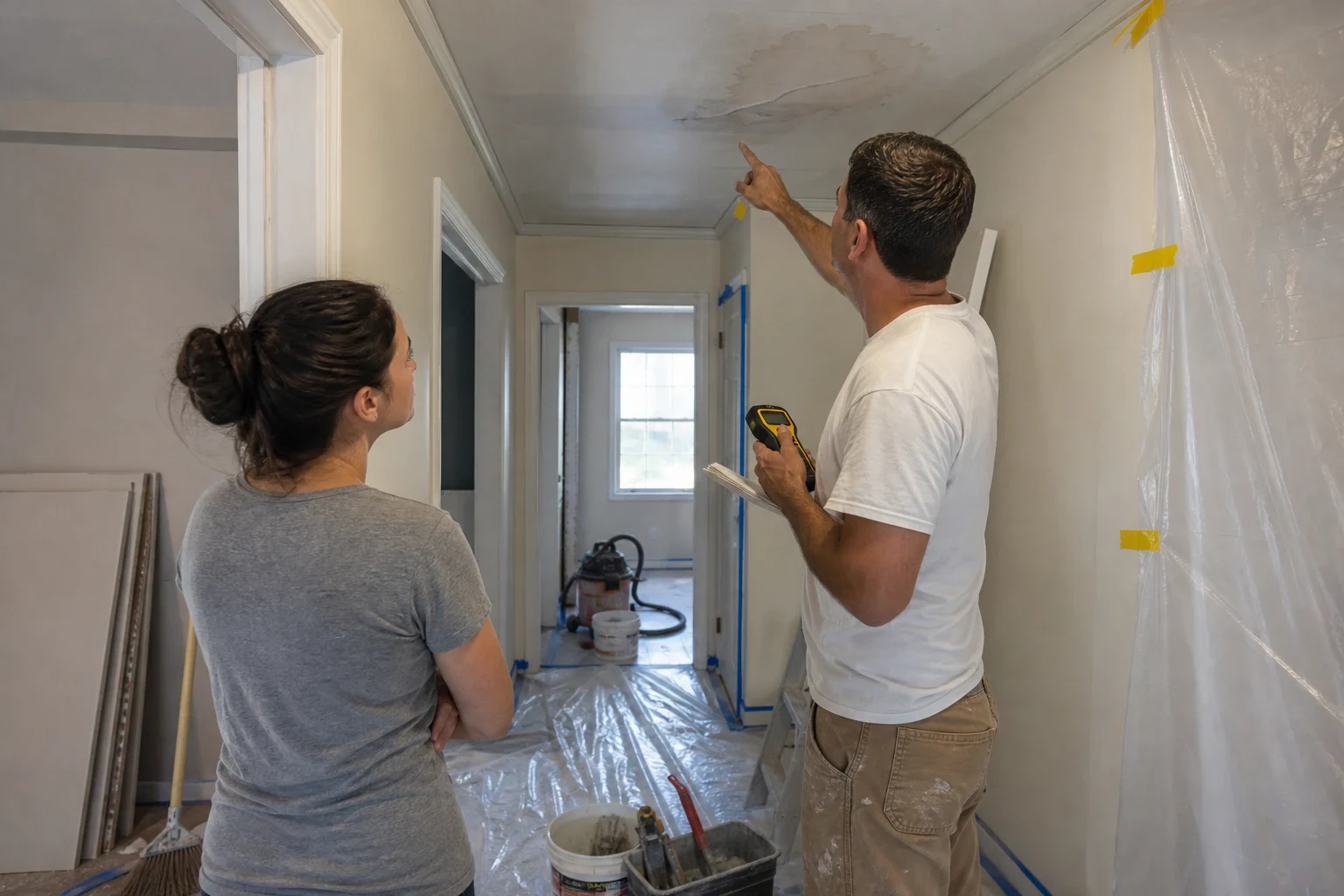
Signs your walls need prep before painting
- Old patches show through
- You can see the outline of past repairs, especially in the afternoon light. The edges were never feathered out.
- Paint is peeling or bubbling
- Bathrooms and kitchens are common spots. Humid summers make weak paint let go faster.
- Torn paper after wallpaper removal
- Brown paper showing through means the drywall face is damaged. Paint on raw paper bubbles, so it needs sealing and a skim coat first.
- Dents, dings and anchor holes
- Years of furniture, doorknobs and shelf anchors leave a wall full of small marks. One or two are easy to miss. Fifty are not.
- Walls feel rough or wavy
- Run your hand along the wall. If it feels bumpy or you see shadows at an angle, a skim and sand will flatten it out.
How a prep job runs
- 1
Walkthrough and quote
We look at the walls with you, point out what needs work and explain why. You get a written estimate that lists each room or area.
- 2
Protect the room
We move what we can, cover the rest, lay drop cloths and tape plastic over doorways and vents. This keeps dust in the room we are working in.
- 3
Repair, fill and skim
We scrape, reset nails, fill holes and skim rough areas. Compound needs time to dry, so bigger jobs usually take more than one visit.
- 4
Sand, check and prime
We sand smooth, check every wall with a light and fix what it shows. Repaired areas get spot primed.
- 5
Clean up and final look
We vacuum, pull the plastic and wipe down surfaces. Your contact walks the room with you before we call it done.
What moves the price
Prep work is priced on how much there is to fix, not just the size of the room. A large wall in good shape can cost less than a small one covered in old patches. We give you the price by phone or after a walkthrough, with each area listed so nothing is a surprise.
- Wall condition
- A few nail holes is quick work. Peeling paint, torn paper or many old patches take more coats and more drying time.
- Full skim coat or spot repairs
- Spot filling is faster. A full skim over a whole wall uses more material and labor but gives the flattest result.
- Ceilings and height
- Ceilings and stairwells need ladders or staging and slow the work down.
- Furnished or empty rooms
- An occupied room with furniture to move and cover takes longer to protect than an empty one.
Questions about surface prep and sanding
- How much dust will there be?
- Some, but we keep it contained. We seal the doorway with plastic, cover floors and furniture, and use sanders connected to a vacuum. We clean up at the end of each day.
- Do you paint after the prep is done?
- We do paint touch-ups on the areas we repair. If you plan a full repaint, we leave the walls sanded and primed so your painter can start right away.
- How long does it take?
- A room with light repairs can often be done in a day. Skim coating takes longer because each coat has to dry before sanding, so plan on two or three visits for heavier work.
- My home is older. Is sanding safe?
- Homes built before 1978 may have lead in the old paint layers. Tell us the age of your home when you call. We will talk through it before any sanding starts.
- Can you fix walls damaged by wallpaper removal?
- Yes. We seal the torn paper so it will not bubble, then skim and sand the wall flat. It is one of the most common prep jobs we see.
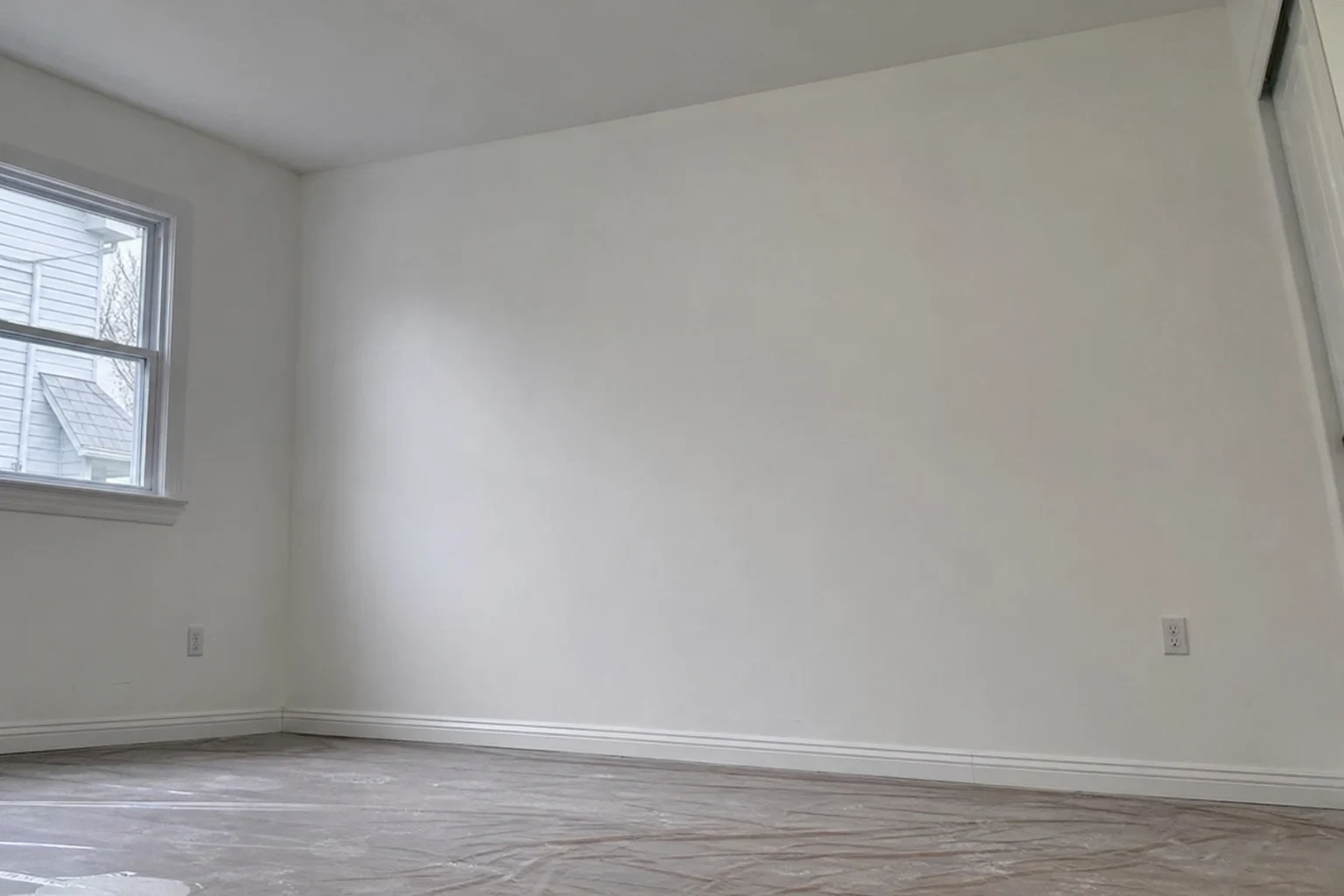
Get your walls ready for paint
Tell us which rooms need work and what shape the walls are in. The person you talk to stays your contact through cleanup.